The history of «La Sidra de Papel» (“Paper Cider”) begins with Fernando Paredano, a great enthusiast of cider and its culture, peeling off a label in a cider house in Cimadevilla (Gijon) in 2001, when the first cider labelling law had just come into force and when it was still being debated whether it should have a collar, a paper label or a sticker.
La historia de “La Sidra de Papel” comienza con Fernando Paredano, gran entusiasta de la sidra y su cultura, despegando una etiqueta en una sidrería de Cimadevilla (Gijón) en 2001, recién entrada en vigor la primera ley de etiquetado para la sidra y cuando aún se debatía si debía llevar collarín, etiqueta de papel o pegatina.
After years of searching the Internet, sending letters to more than half the world, exchanging labels and meeting with collectors on Sundays, first in the basement of El Molinon Stadium and nowadays in El Ateneo de La Calzada, we reached the summer of 2010, when the opportunity arose to put on an exhibition with the material collected.
Tras años de buscar por Internet, enviar cartas a más de medio mundo, intercambiar etiquetas y reunirse con coleccionistas los domingos en los bajos de El Molinón primero y hoy en día en El Ateneo de La Calzada llegamos al verano de 2010, cuando se presenta la oportunidad de hacer una exposición con el material recopilado.
In Fernando’s words, starting the collection was not difficult, despite being very busy with his work at the head of the cider house Sidreria Paredano in Luarca, as the cider makers themselves provided him with the labels. On his visits to the Asturian cider houses, he managed to obtain unique pieces, such as first editions, old or rare ones, after having a good conversation with the owner, tasting cider at the foot of the barrels.
En palabras de Fernando, comenzar la colección no fue difícil, a pesar de estar muy ocupado en su trabajo al frente de la Sidrería Paredano de Luarca, ya que los propios llagareros le facilitaban las etiquetas. En sus visitas a los llagares de la región, lograba conseguir piezas únicas, como primeras ediciones, antiguas o raras, tras tener una buena conversación con el propietario, degustando sidra al pie de los toneles.
In July 2010 took place the first great exhibition of La Sidra de Papel in Spain, which meant a before and after in his work as a collector, since now he would do it in a professional way, divided into four blocks:
– labels of 101 natural cider, sparkling cider, table cider and ice cider producers
– labels of 20 champagne cellars in Asturias
– labels of ciders from the rest of Spain and the world
– photos, postcards, stickers, invoices, posters, etc…, mainly from Asturias and South America.
En julio de 2010 tuvo lugar la primera gran exposición de La Sidra de Papel en España, lo cual supuso un antes y un después en su labor de coleccionista, ya que ahora lo haría de forma profesional, dividida en cuatro bloques:
– etiquetas de 101 llagares de sidra natural, espumosa, de mesa y de hielo
– etiquetas de 20 fábricas champaneras de Asturias
– etiquetas de sidras del resto de España y el mundo
– fotos, postales, cromos, facturas, carteles, etc…, principalmente de Asturias y Sudamérica
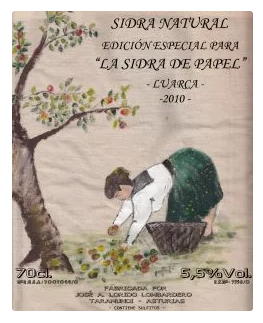
For this occasion, a commemorative label was made under the name of «La Pañadora»(apple picker), designed by Fernando’s wife, Lydia Rico, another great cider lover, which was attached to bottles from the Solleiro cider press (Taramundi).
Para tal ocasión, se realizó una etiqueta conmemorativa bajo el nombre de “La Pañadora”, diseñada por la mujer de Fernando, Lydia Rico, otra gran amante de la sidra, que iba adherida a botellas del llagar Solleiro (Taramundi).
After this first contact with the public, another exhibition followed in March 2020 sponsored by the cider collecting group «Sidrastur» under the title «El Papel de La Sidra» together with two other members of the group at the Ateneo de La Calzada, which was suspended shortly after opening due to the pandemic.
Tras esta primera toma de contacto con el público, siguió otra exposición en marzo de 2020 auspiciada por el grupo de coleccionismo sidrero “Sidrastur” bajo el título «El Papel de La Sidra» junto a otros dos miembros del grupo en el Ateneo de La Calzada y que fue suspendida al poco de inaugurar a causa de la pandemia.
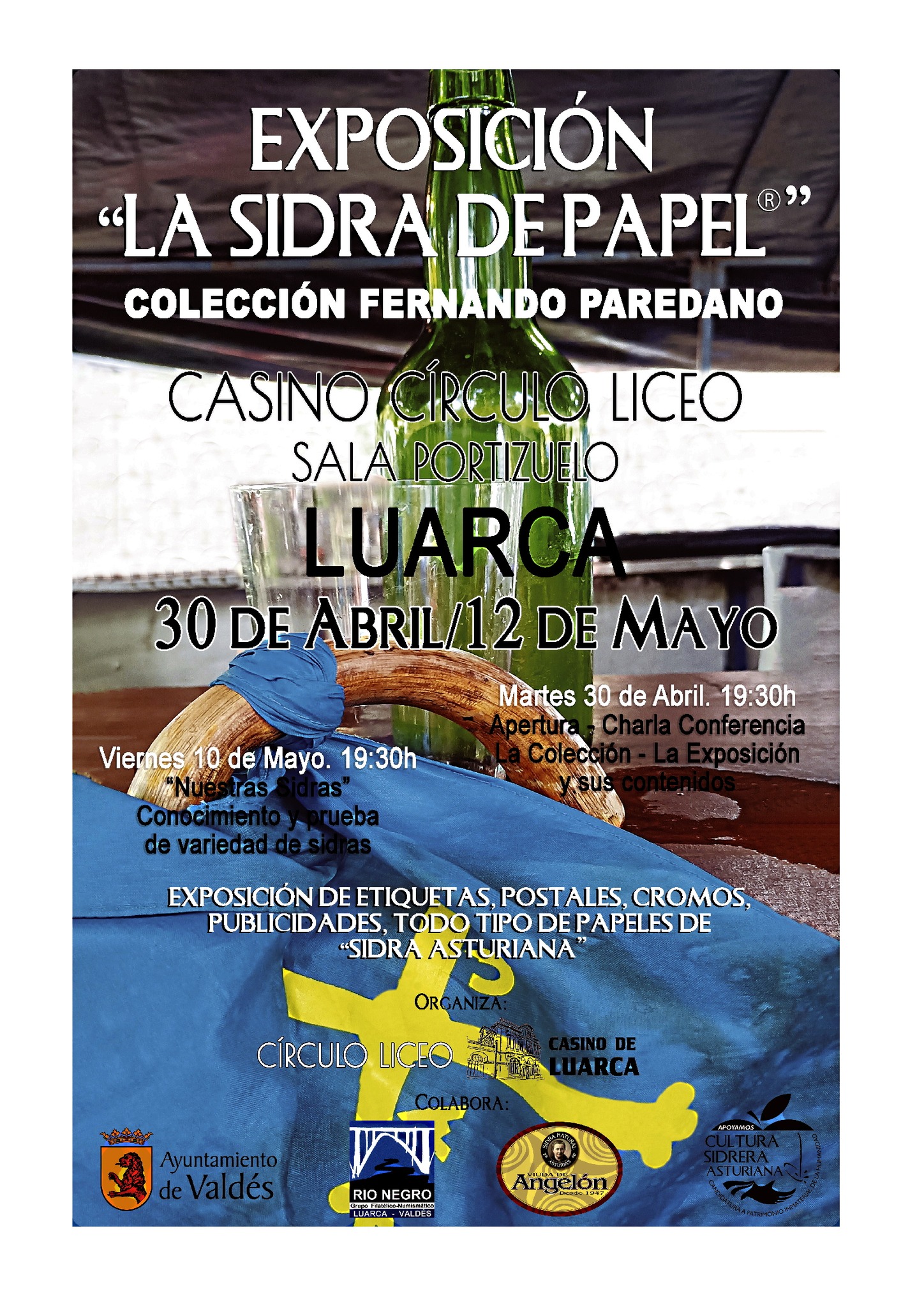
From 30 April to 12 May 2024, the Casino Circulo Liceo in Luarca hosted the exhibition «La Sidra de Papel», the largest and best preserved private collection of labels, postcards, stickers, advertisements and other curiosities related to Asturian cider since 1872. In the exhibition, which included only part of his immense collection, visitors could enjoy a master class by Fernando on the history of his research work for more than 25 years, as well as a tasting of twelve types of cider from Viuda de Angelon cider mill.
Del 30 de abril al 12 de mayo de este año 2024, el Casino Círculo Liceo de Luarca acogió la exposición «La Sidra de Papel», la mayor y mejor conservada colección privada de etiquetas, postales, cromos, publicidades y demás curiosidades relacionadas con la sidra asturiana desde 1872. En la muestra, que recogía sólo parte de su inmensa colección, se pudo disfrutar de una clase magistral a cargo de Fernando sobre la historia de su trabajo de investigación desde hace más de 25 años, así como de una degustación de doce tipos de sidra del llagar Viuda de Angelón.
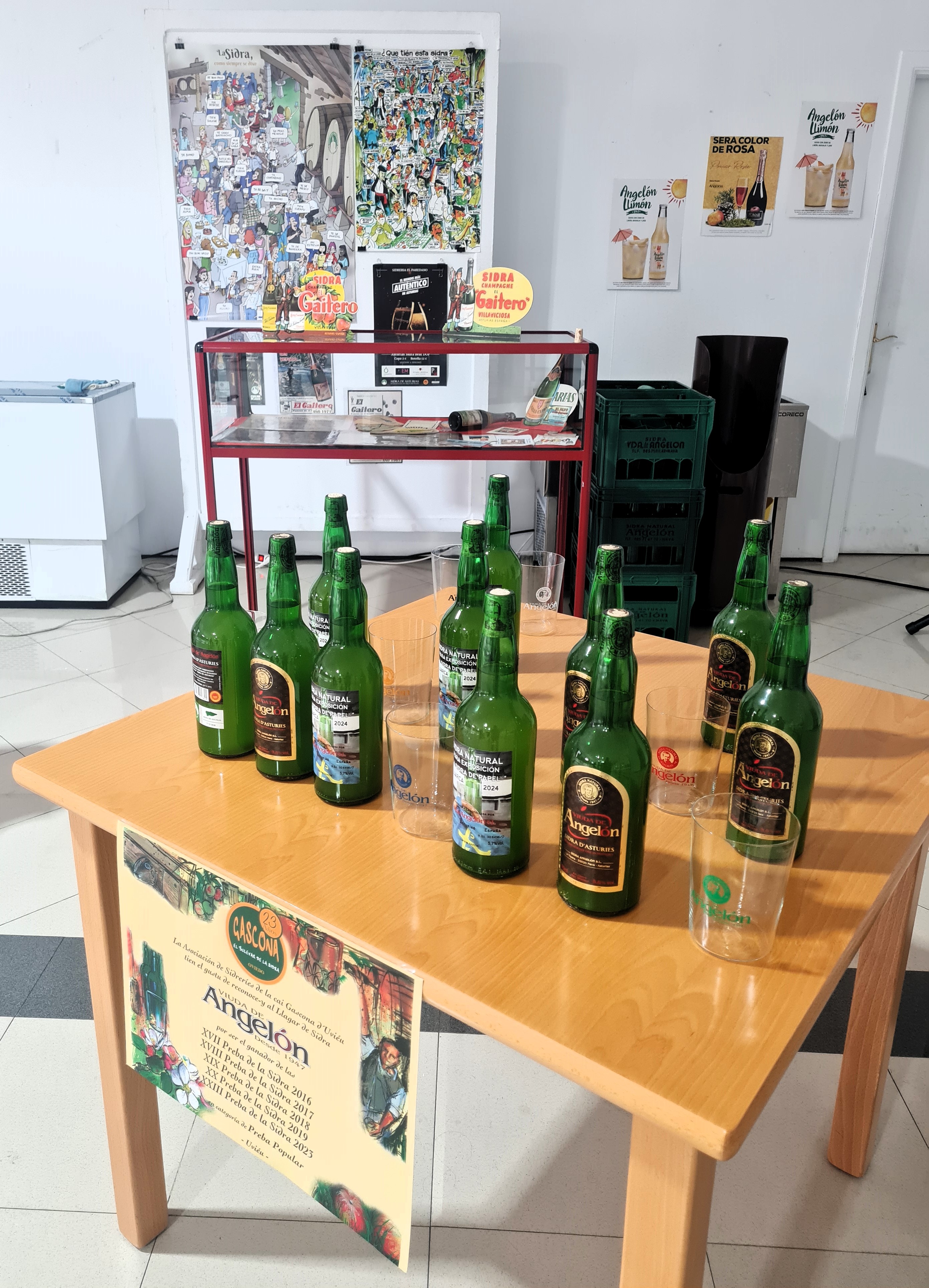
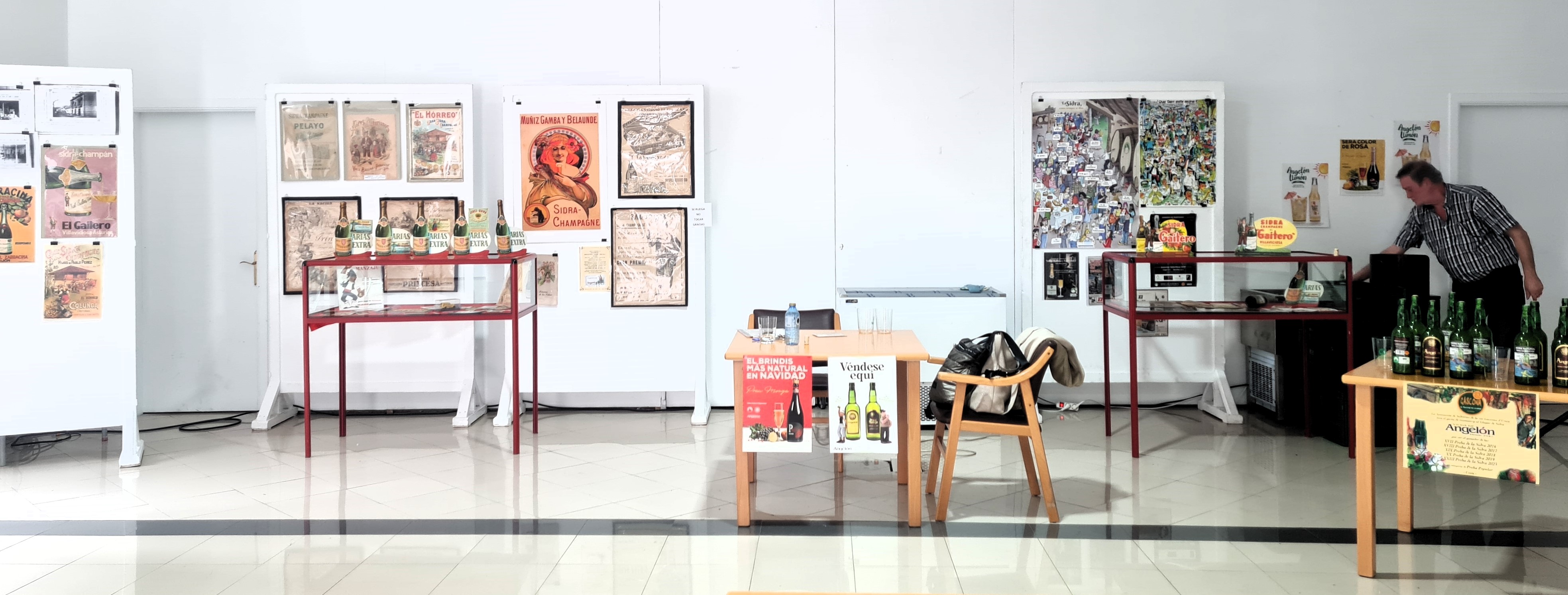
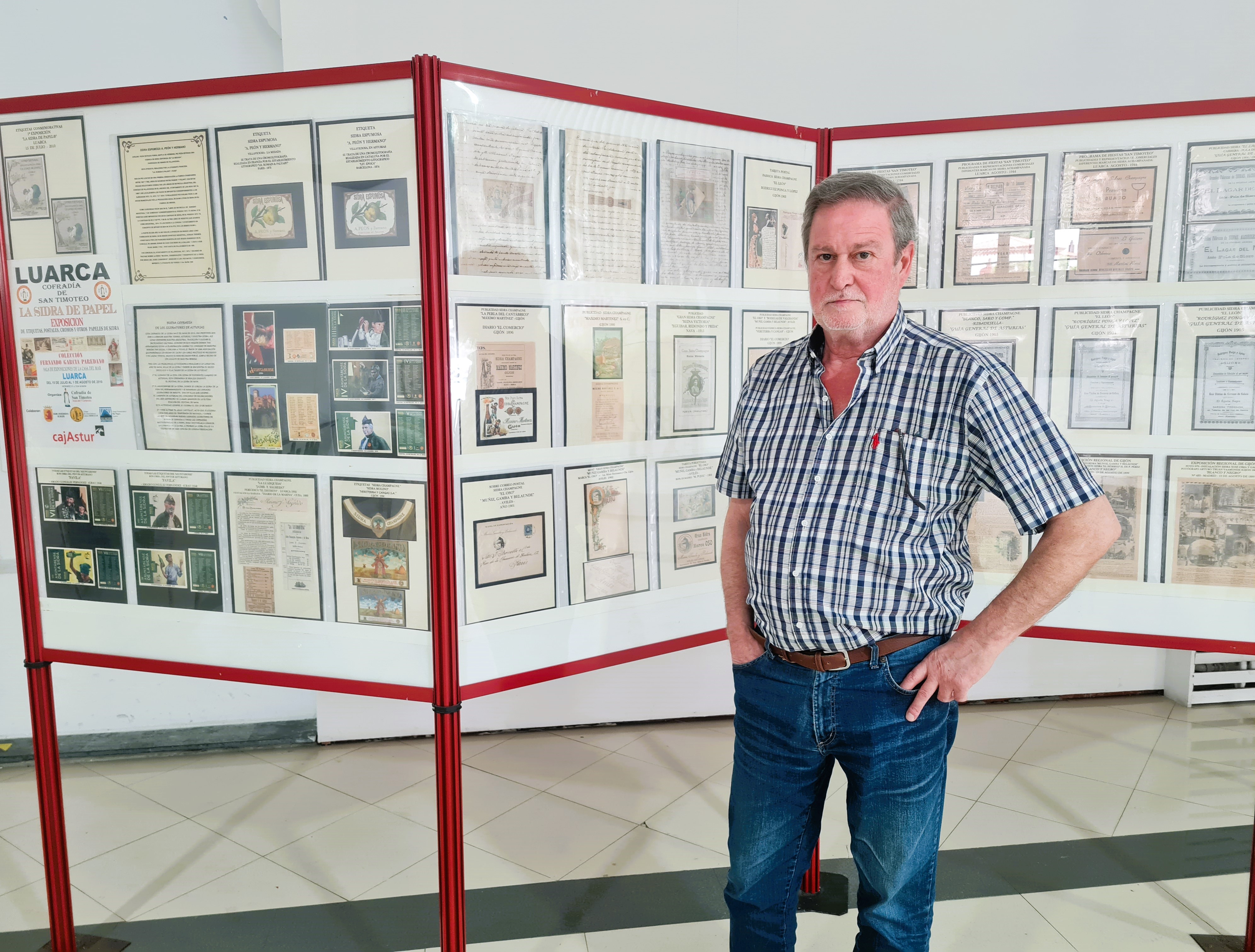
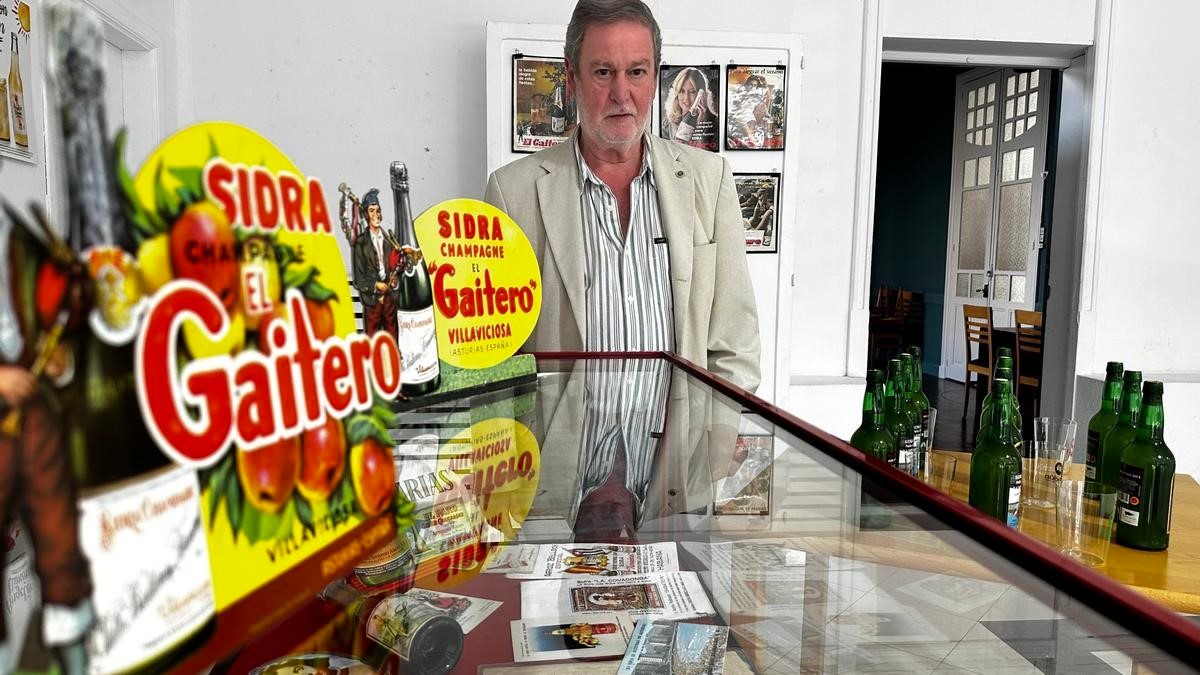
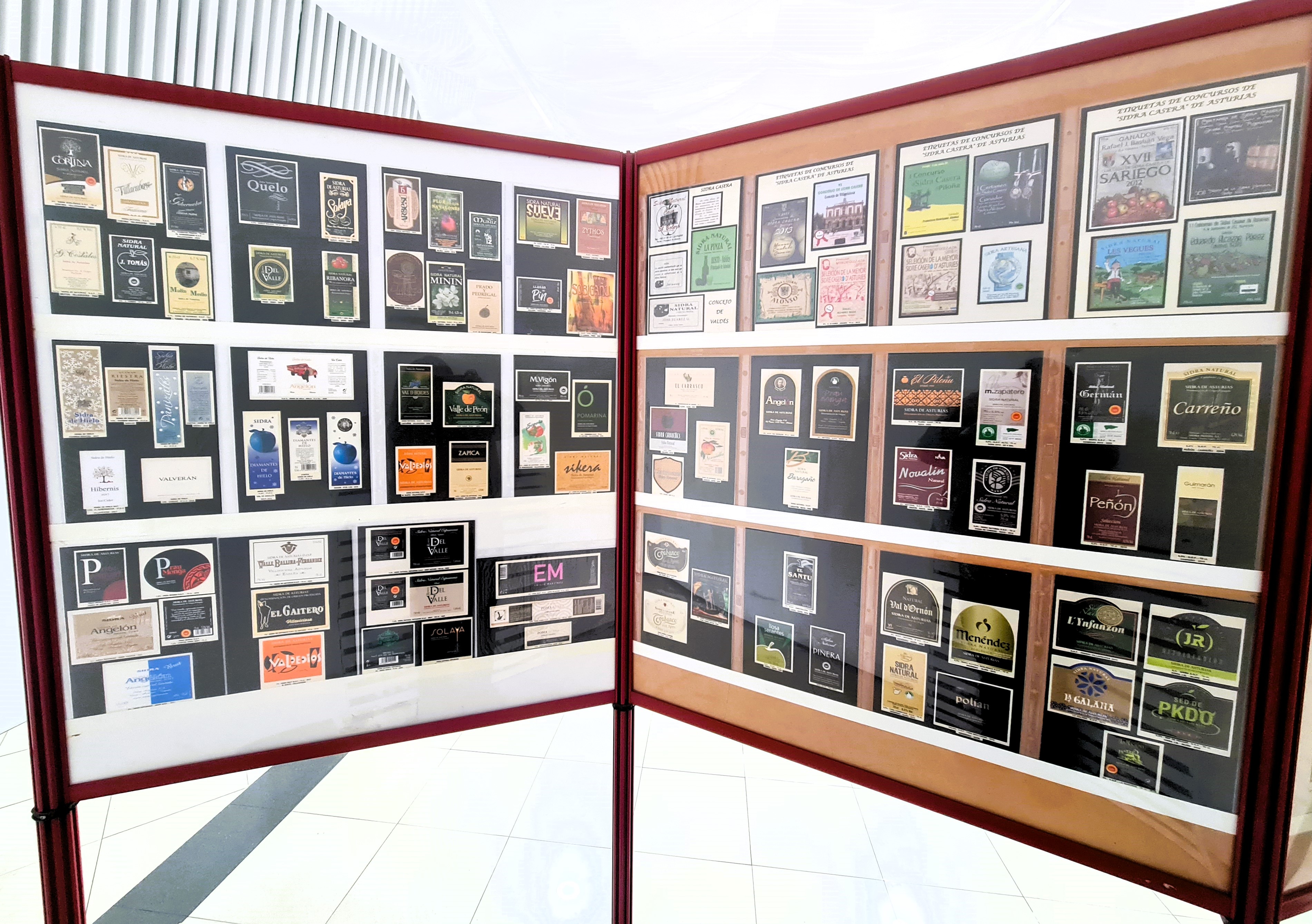
The exhibition consisted of 32 panels of the Philatelic Numismatic Group «Rio Negro» of Luarca, of which the collector himself is a member, plus 8 panels and 3 showcases lent by the Town Council, where labels and advertisements of all kinds were exhibited, as well as posters and other curiosities. Fernando Paredano has managed to compile a large part of the history of Asturian cider thanks to his own initiative and participation in different cider events, as well as exchanges with collectors from all over the world.
La exposición estuvo compuesta por 32 paneles del Grupo Filatélico Numismático “Río Negro” de Luarca, del cual forma parte el propio coleccionista, más 8 paneles y 3 vitrinas cedidas por el Ayuntamiento, donde se expusieron etiquetas y publicidades de toda índole, así como cartelería y otras curiosidades. Fernando Paredano ha conseguido recopilar una gran parte de la historia de la sidra asturiana gracias a su propia iniciativa y participación en distintos eventos sidreros, así como intercambios hechos con coleccionistas de todo el mundo.
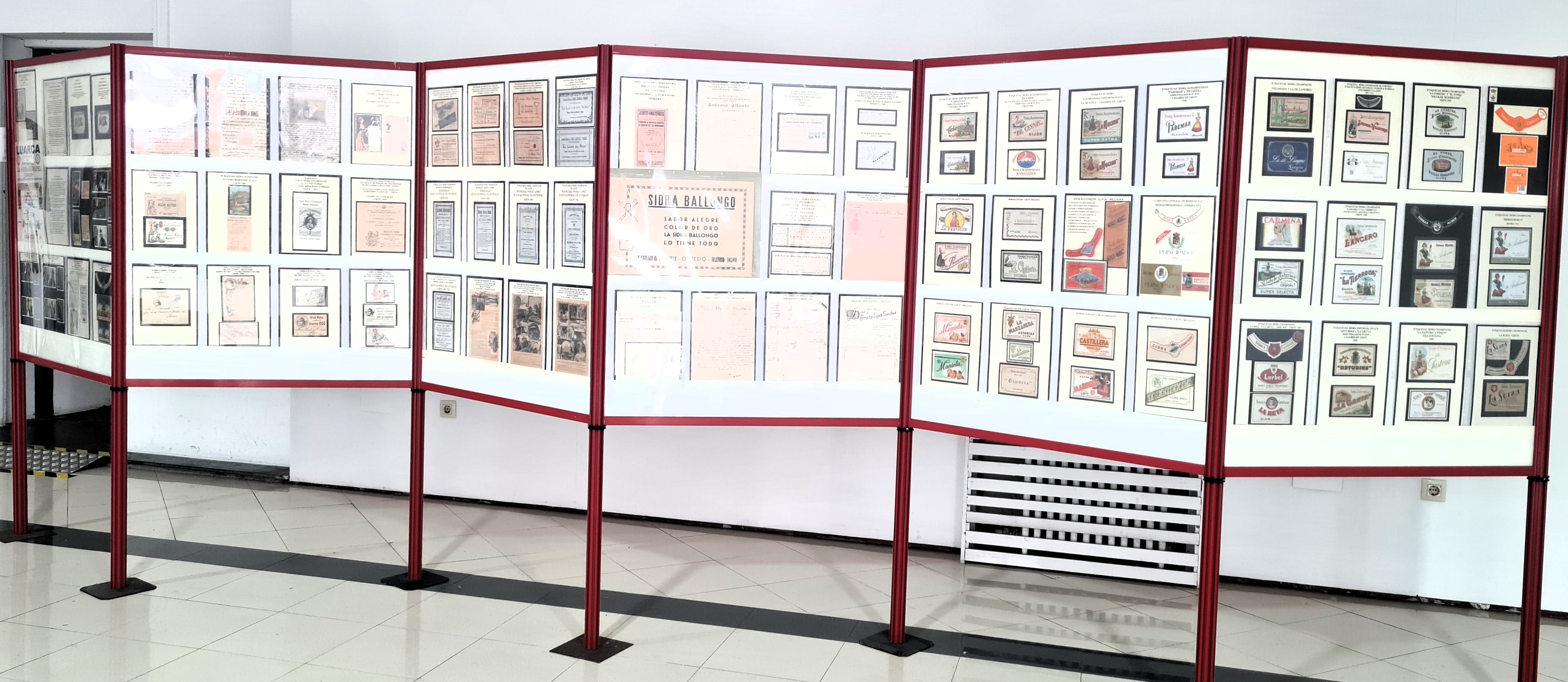
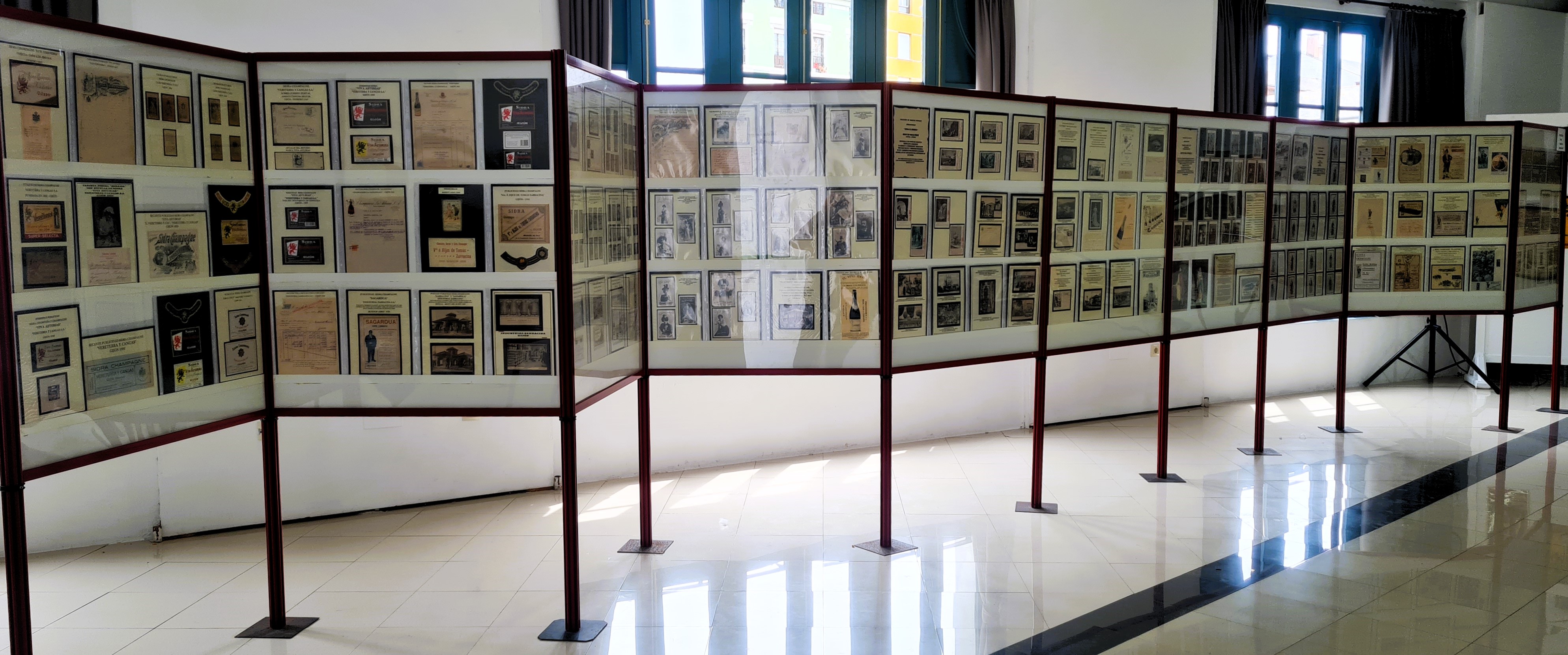
The first labels of the 121 cider houses currently registered range from the oldest cider houses -some of which have already disappeared- to the newest ones, as is the case of Cañon (2014) or El Romano (2015). Some stand out for their large size, such as San Pedro, El Fugitivo, Bernueces, El Trole or Cortina; others, such as Valveran, show the only harvest of natural cider – at one time they also had table cider and sparkling cider before devoting themselves exclusively to ice cider; some pay homage to the homemade cider festivals of Piloña, Sariego, Caudal or Villaviciosa (Mundo Collada), as well as three from the council of Valdes where this type of competitions are not held; others show the first ciders with Protected Designation of Origin: Baragaño (L’Argayon -now disappeared-), Sobigañu (La Llarada), Minin, Muño or La Flor de Navalones.
Las primeras etiquetas de los 121 llagares registrados actualmente abarcan desde los llagares más antiguos- algunos ya desaparecidos- hasta los más nuevos, como es el caso de Cañón (2014) o El Romano (2015). Algunas destacan por su gran tamaño, como San Pedro, El Fugitivo, Bernueces, El Trole o Cortina; otras como la de Valverán muestran la única cosecha de sidra natural- en su día también tuvieron sidra de mesa y achampanada antes de dedicarse en exclusiva a la sidra de hielo-; algunas homenajean los festivales de sidra casera de Piloña, Sariego, Caudal o Villaviciosa (Mundo Collada), así como tres del concejo de Valdés donde no se realiza este tipo de concursos; otras muestran las primeras sidras con Denominación de Origen: Baragaño (L’Argayón- ya desaparecido-), Sobigañu (La Llarada), Minín, Muñó o La Flor de Navalones.
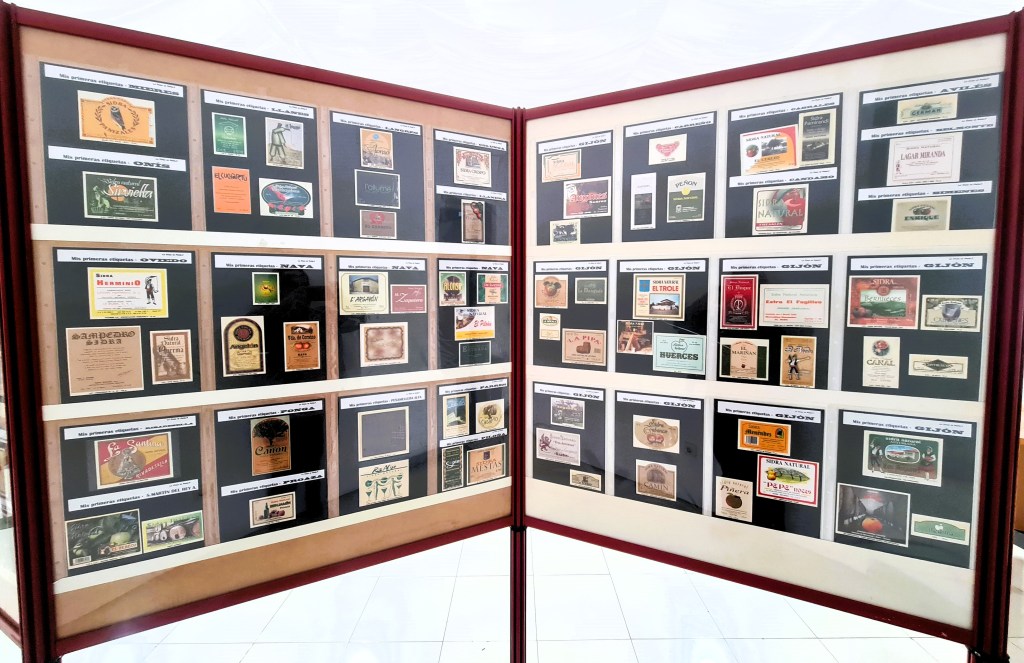
And so on, a long list of curiosities, including the following:
– Collars and labels of institutional ciders, brut, pouring and table ciders, of which 50 cases were sent for the wedding reception of the Prince of Asturias (current King of Spain) in May 2004, which was finally cancelled after the Madrid bombings of 11-M.
Y así, un largo etcétera de curiosidades, entre las que figuran las siguientes:
– Collarines y etiquetas de sidras institucionales, brut, escanciado y de mesa, de las cuales se enviaron 50 cajas para la recepción de la boda del Príncipe de Asturias (actual Rey de España) en mayo del 2004 y que finalmente fue suspendida tras los atentados de Madrid del 11-M.
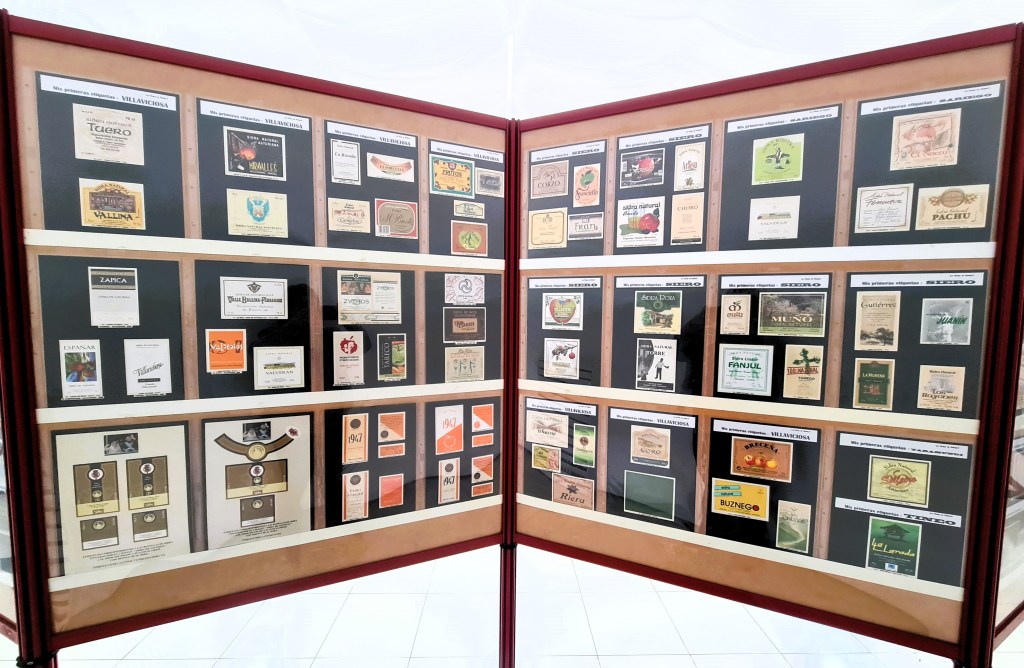
– The oldest PDO Brut cider, El Urriellu, Valle, Ballina y Fernandez or Poma Aurea (Sidra Trabanco), presented at SICER, International Quality Cider Fair at FIDMA. Held in 2007 and 2009, this fair was not without controversy due to the impossibility of presenting those ciders that did not have a Designation of Origin. The first year it was held, countries as diverse as Argentina, Mexico, Japan, England, France, Sweden, Norway, Canada and the USA took part.
– Sidra Brut DOP más antigua, El Urriellu, Valle, Ballina y Fernández o Poma Áurea (Sidra Trabanco), presentada en SICER, Feria Internacional de la Sidra de Calidad en la FIDMA. Desarrollada en los años 2007 y 2009, dicha feria no estuvo exenta de polémica por la imposibilidad de presentarse a aquellas sidras que no tuviesen Denominación de Origen. El primer año que se celebró participaron países tan dispares como Argentina, México, Japón, Inglaterra, Francia, Suecia, Noruega, Canadá o EEUU.
– CONGER cider, Conrado and German, from the 1920s: before the taking of Gijon in the Civil War, they loaded all their machinery into two lorries and went to Meliana, the liberated area of Valencia, where they returned to produce cider under the names of Maniela, La Traviesa, La Carreña, La Manzaneda or La Praviesa; La Mocina and La Carbayona cider label (made in Gijon!!)
– Sidra CONGER Conrado y Germán, de los años 20: antes de la toma de Gijón en la Guerra Civil, cargaron toda su maquinaria en dos camiones y se fueron a Meliana, la zona liberada de Valencia, donde volvieron a producir sidra bajo los nombres de Maniela, La Traviesa, La Carreña, La Manzaneda o La Praviesa; Etiqueta Sidra La Mocina y La Carbayona (hecha en Gijón!!)
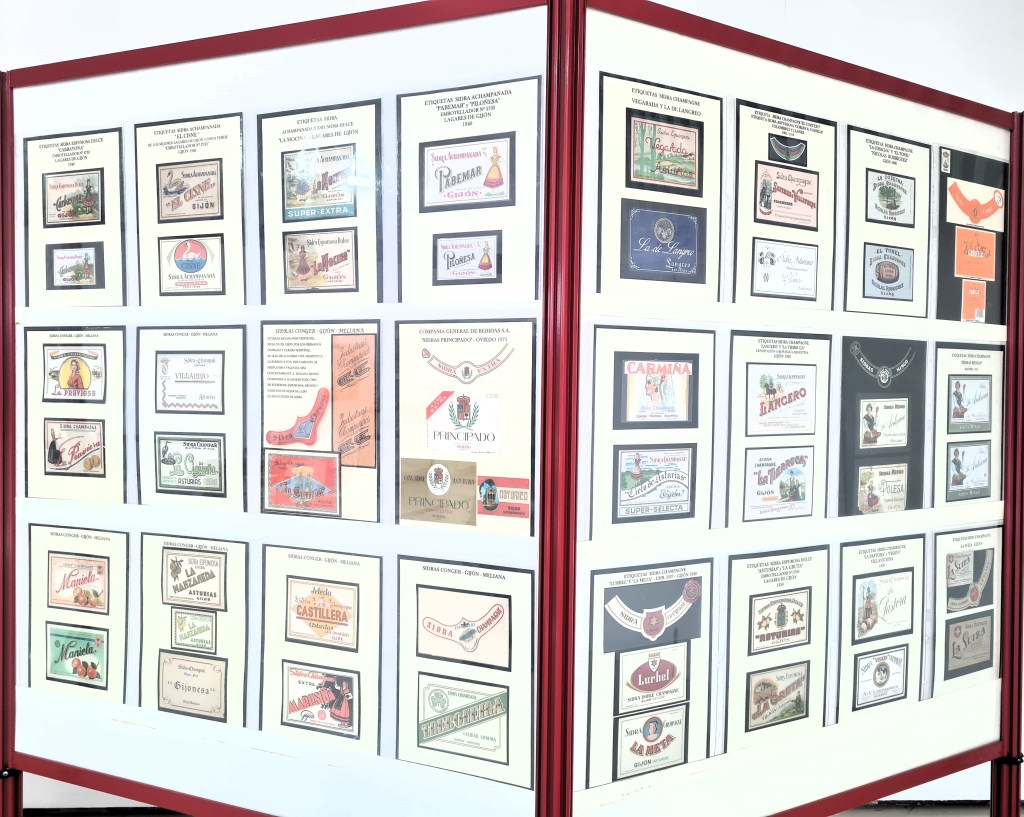
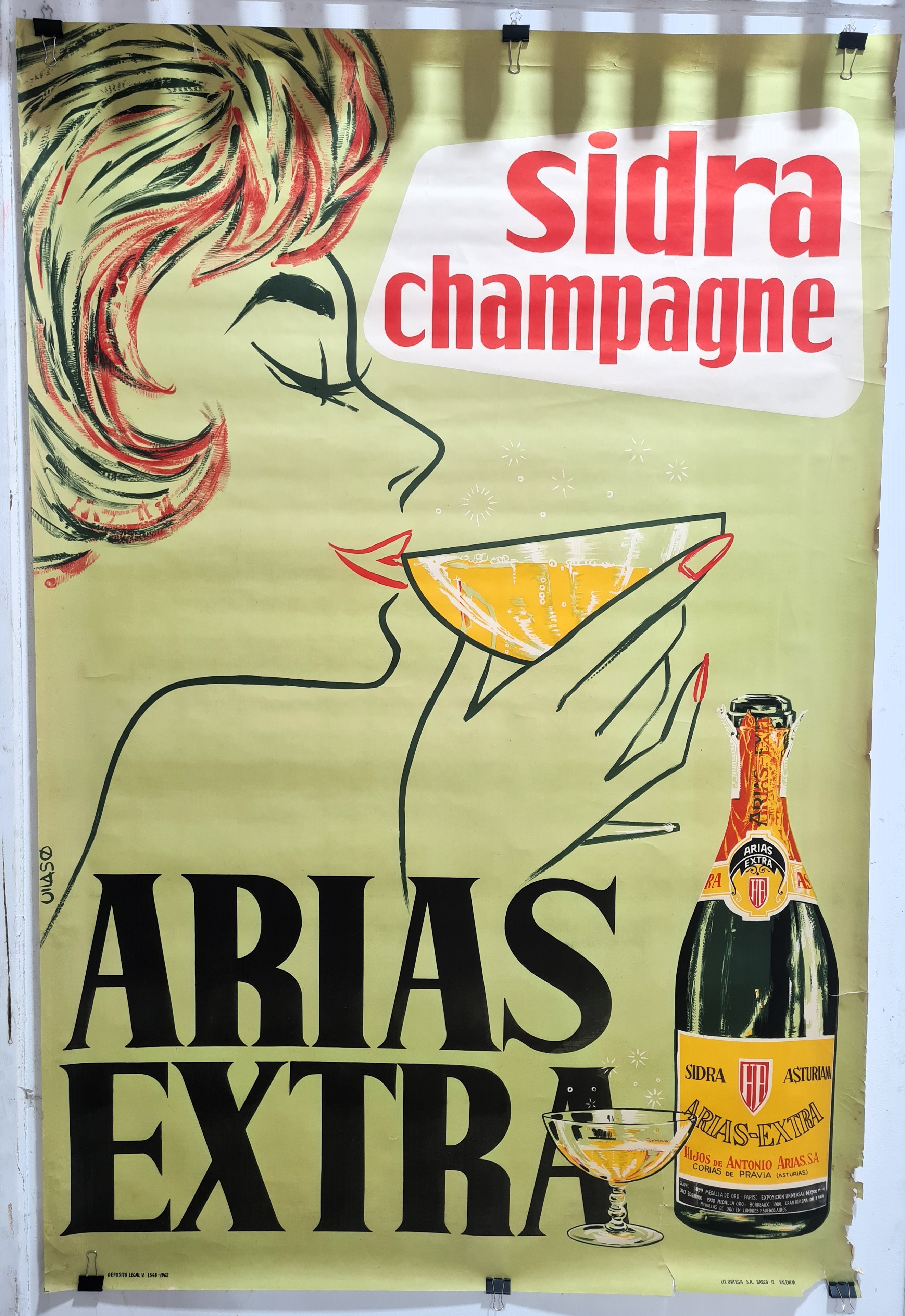
– Antonio Arias, (Arias, Nachon & Co.) Sidra Pelayo, a company created in Infiesto, dissolved in 1902. Antonio Arias kept the brand and that same year established his own champagne factory in Corias de Pravia where he already had the company Mantequerias Arias, Sidra Pelayo already had its advertising in Cuba, Buenos Aires and Spain, as it had the distribution network of the butter factory, which sold its products since the late 1800s in the Philippines, Cuba and Madrid and took advantage of it to expand the cider; – Arias Extra, comes with the Pelayo brand and then, La Praviana, La Pastora, and a cider label for the Basko – Astur bank
– Antonio Arias, (Arias, Nachón y Cía.) Sidra Pelayo, sociedad creada en Infiesto, disuelta en 1902. Antonio Arias se queda con la marca y ese mismo año establece su propia champanera en Corias de Pravia donde ya tenía la empresa Mantequerias Arias, Sidra Pelayo ya tiene su publicidad en Cuba, Buenos Aires y España, ya que poseía red de distribución de la mantequera, que vendía sus productos desde finales de 1800 en Filipinas, Cuba o Madrid y la aprovechó para la expansión de la sidra; -Arias Extra, se viene con la marca Pelayo y luego, La Praviana, La Pastora, y etiqueta de sidra para el banco Basko – Astur

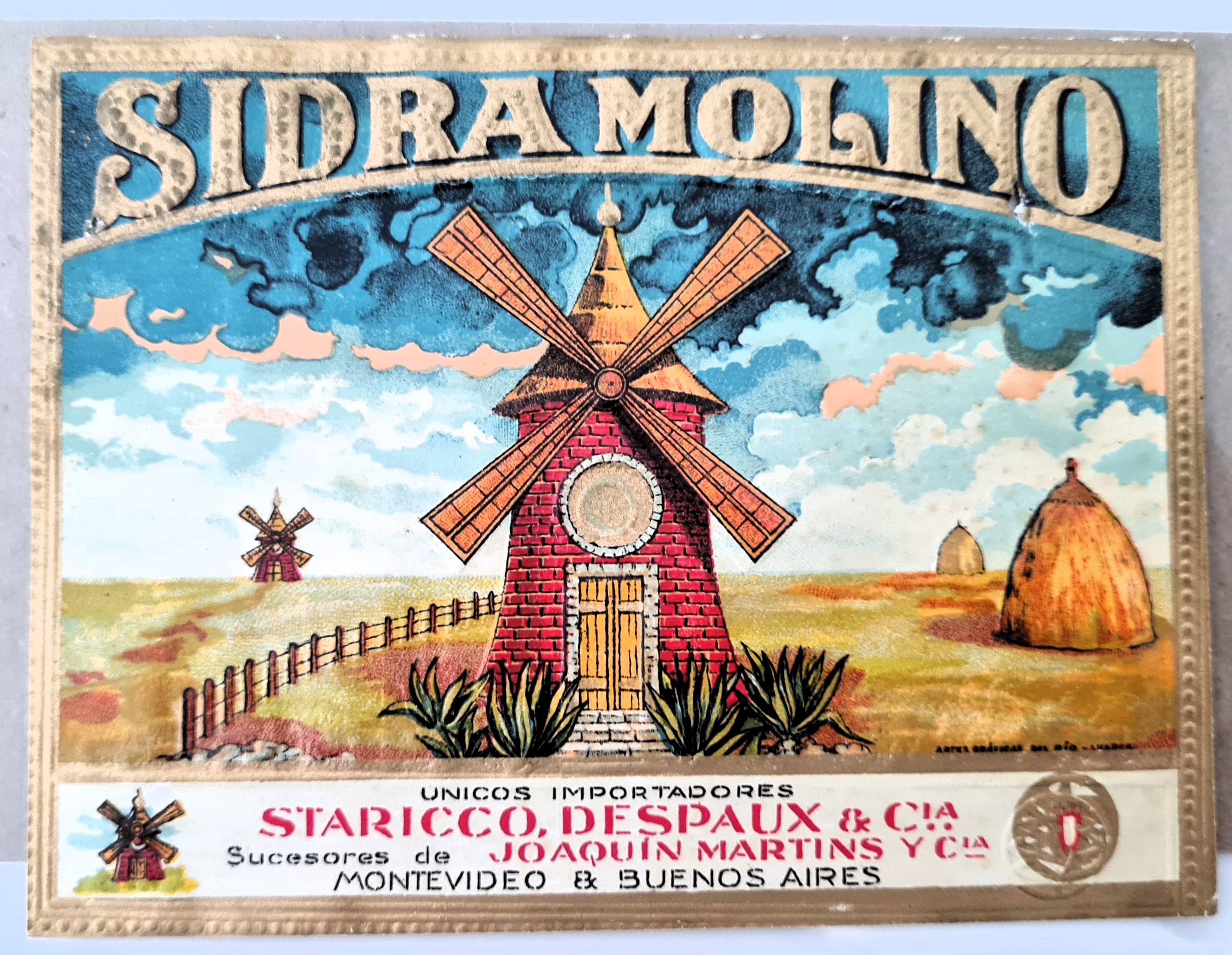
– Vereterra, from Oviedo, with its price list of 1895 and 1897, which later created the partnership with Cangas. El Molino cider, the highest quality label in existence, showing in gold and relief the blades of the mill, the fence, the balagar (pile of mown grass) and the seals. Die-cut -also the collar and the small label- at Artes Graficas del Rio Luarca. The company Viña made another plain.
-Vereterra, de Oviedo, con su tarifa de precios de 1895 y 1897 que, posteriormente crean la sociedad con Cangas. Sidra El Molino, la etiqueta de mayor calidad que existe, mostrando en dorados y relieve las aspas del molino, la cerca, el balagar y los sellos. Hecha a troquel- también el collar y la etiqueta pequeña- en Artes Gráficas del Río Luarca. La empresa Viña hizo otra lisa.

– Villaviciosa, A. Peon labels, lithographs from 1872 and 1874, with 20,000 litres of cider and paying 13 pesetas (former Spanish currency) in taxes to the treasury, is registered in the registration book between 1872 and 1875. His lithographs, commissioned in Paris and Barcelona, are of exceptional quality, with a paraffin cover to protect them. They are the oldest surviving lithographs from Villaviciosa (Amandi) and among the oldest in Asturias.
– Villaviciosa, etiquetas A. Peón, litografías de 1872 y 1874., con 20.000 litros de sidra y pagando 13 pesetas en impuestos al tesoro, aparece registrado en el libro de matrícula entre los años 1872 y 1875. Sus litografías, encargadas en París y Barcelona, son de una calidad excepcional, con una pátina de parafina para protegerlas. Son las más antiguas que se conservan de Villaviciosa (Amandi) y de las más antiguas de Asturias.
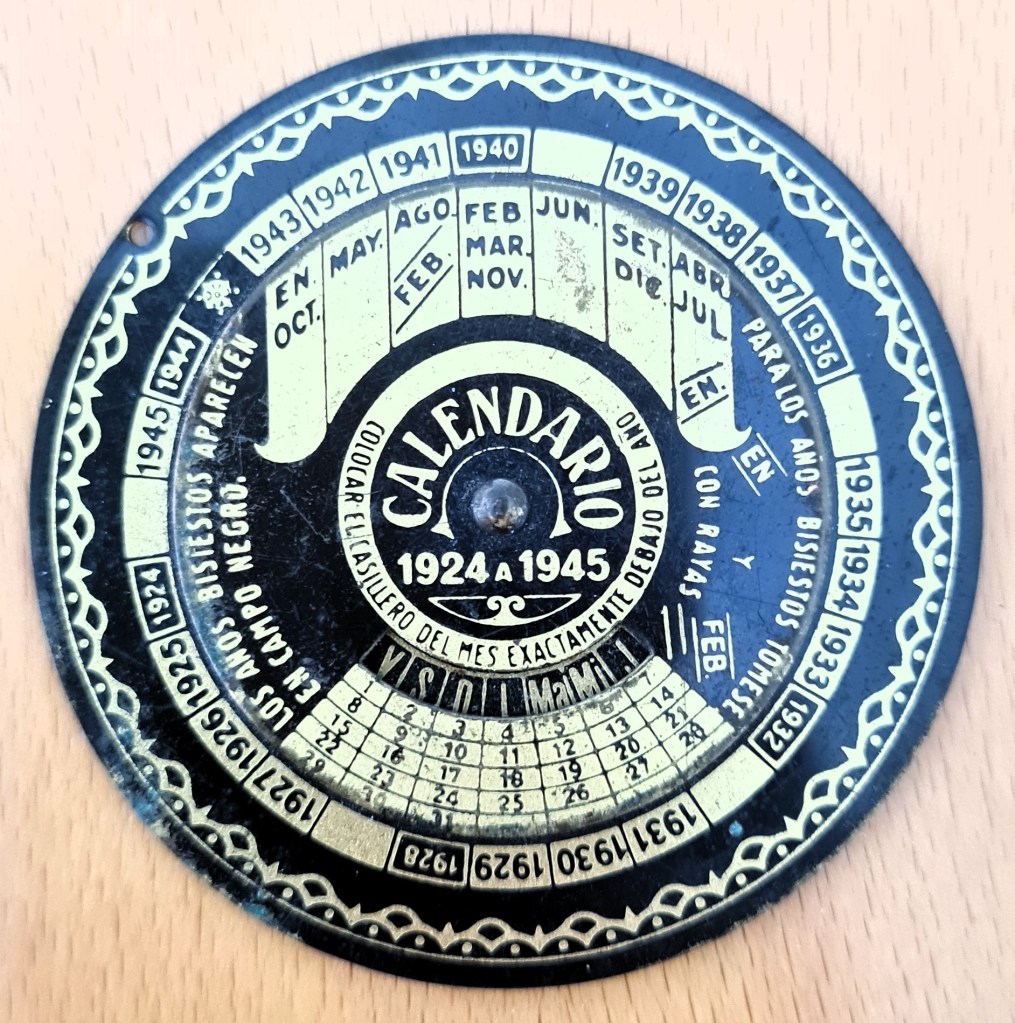
– Discs (from 1924 to 1945) with universal calendar on the back (La Aldeana and El Gaitero), geographical disc Sidra Zarracina, with the most important cities of Asturias: Gijon, Langreo and Luarca, as well as their number of inhabitants and all kinds of data on the province.
– Discos (del 1924 al 1945) con calendario universal en la parte trasera (La Aldeana y El Gaitero), disco geográfico Sidra Zarracina, con las ciudades más importantes de Asturias: Gijón, Langreo y Luarca, así como su número de habitantes y todo tipo de datos de la provincia.

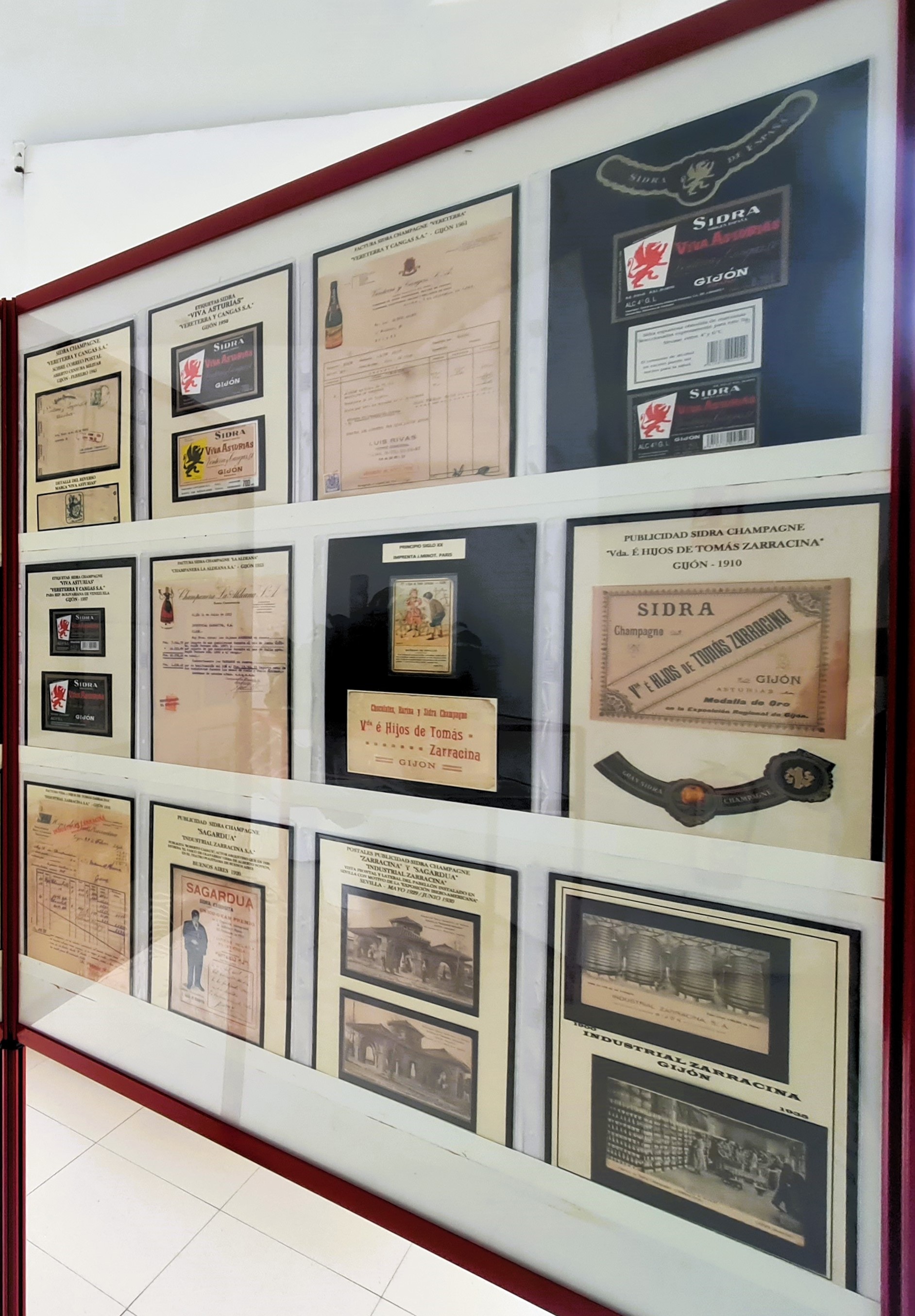
– In 1900, Zarracina – founded in 1857 – in order to win over the Basque market, registered the label Sidra Sagardua (1900), with advertising in the newspaper La Nacion de Buenos Aires without its name or Asturias appearing. Initially, it was only sold in Argentina. Advertising in the same newspaper for Sidra El Gaitero, for 6 bottles a crocodile leather gift box. Also labels of children, vedettes, cities… The first sparkling cider, followed by Cima (which closed in the 50’s) and, later, Blanco (Ribadesella), Vereterra, El Oso, El Gaitero…, whose production they learnt in France. They learnt how to make it in France; installation of Zarracina for the Ibero-American Exhibition in Seville; reproduction of the church of Santa Maria in Cangas de Onís; photos of working women in the 1930s; Jose Cima in 1875, repatriated, set up the champagne factory in Oviedo and sent 3,000 cases to Havana which arrived broken due to a miscalculation of pressure when crossing the Equator. After three years of hard work, they managed to send them back to the Cuban market, the most important at the time.
– En 1900, Zarracina- fundada en 1857-, para ganarse el mercado vasco, registra la etiqueta Sidra Sagardua (1900), con publicidad en el periódico La Nación de Buenos Aires sin que aparezca ni su nombre ni Asturias. En principio, solo se vende en Argentina. Publicidad en el mismo periódico de Sidra El Gaitero, por 6 botellas una valija de regalo tipo cuero de cocodrilo. También etiquetas de niños, vedettes , ciudades… La primera sidra achampanada, seguida por Cima (que cerró en los años 50) y, más tarde, Blanco (Ribadesella), Vereterra, El Oso, El Gaitero.., cuya elaboración aprenden en Francia; instalación de Zarracina para la Exposición Iberoamericana de Sevilla; reproducción de la iglesia de Santa María en Cangas de Onís; fotos de los años 30 de las mujeres trabajadoras; José Cima en 1875, repatriado, monta la champanera en Oviedo y envía 3.000 cajas a La Habana que llegan rotas por un mal cálculo de presión al cruzar el Ecuador. Tras tres años de arduo trabajo, logran volver a enviarlas al mercado cubano, el más importante de la época.


– Unique aperitif pieces – since they were thrown away after use – from 1950, with a calendar on the back: Sidra Princesa de Asturias – Perfecto García, Bodegas Asturianas de la Pola.
– Piezas de aperitivo únicas- ya que se tiraban después de usarlas- de 1950, con calendario en la parte trasera: Sidra Princesa de Asturias- Perfecto García, Bodegas Asturianas de la Pola.


– Bernardo Alfageme, known for his canned cider. After his execution and that of his grandson in El Rinconin (Gijón), his brother returned from exile in the 1940s and sold the cider mill to Garcia Turueño (Gijon), who kept the brand and, with the money obtained, ordered the construction of El Maritimo, whose original name was Hospital Marítimo de San Bernardo y San Hermenegildo (the name of Bernardo’s grandson). It was inaugurated in 1945, on Covadonga’s Day; Viñao, El Sol de Asturias; La Asturiana: Valle, Ballina y Fernández and Sidra El Gaitero are not shown; El Guirrio (La Felguera, beginning of the century); La Tremenda (Gijon).
– Bernardo Alfageme, conocido por las conservas. Tras su fusilamiento y el de su nieto en El Rinconín (Gijón), su hermano vuelve del exilio en los años 40 y vende la fábrica de sidra a García Turueño (Gijón), que mantiene la marca y, con el dinero obtenido, manda construir El Marítimo, cuyo nombre original es Hospital Marítimo de San Bernardo y San Hermenegildo (nombre del nieto de Bernardo). Se inaugura en 1945, el día de Covadonga. Sidra Viñao, El Sol de Asturias; La Asturiana: no figuran Valle, Ballina y Fernández ni Sidra El Gaitero; El Guirrio (La Felguera, principios de siglo); La Tremenda (Gijón).

– In the 1940s, Luis Gonzaga, together with Manolo Zapatero, founded Sidra El Bombe in the Nava square. After separating from his partner, Manolo moved to a new cider mill in the town and founded Sidra Zapatero, later M. Zapatero due to legal problems with the brand.
– Luis Gonzaga, en los años 40, se junta con Manolo Zapatero y fundan Sidra El Bombé en la plaza de Nava. Tras separarse de su socio, Manolo se traslada a un nuevo llagar de la localidad y funda Sidra Zapatero, posteriormente M. Zapatero por problemas legales con la marca.
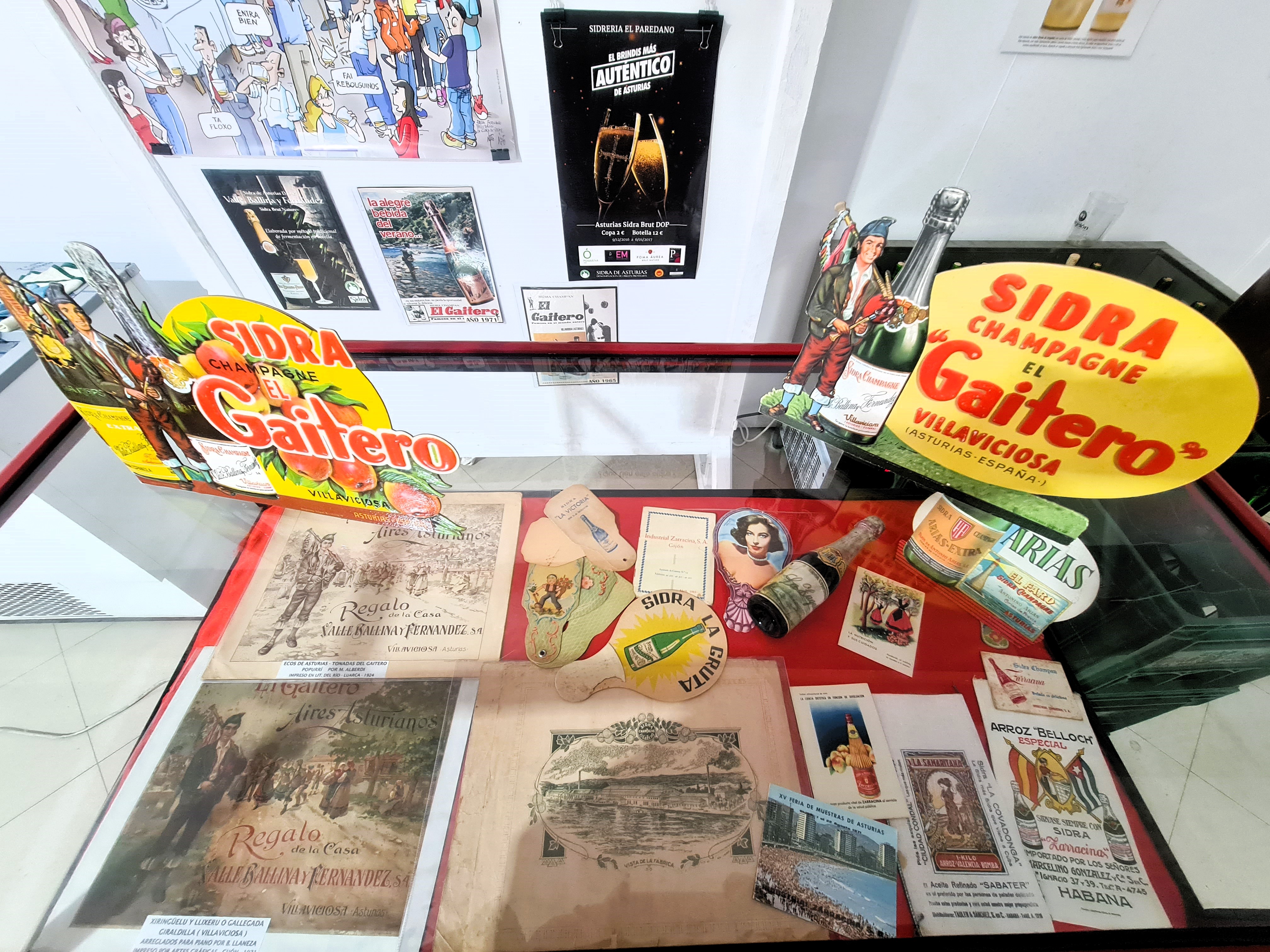
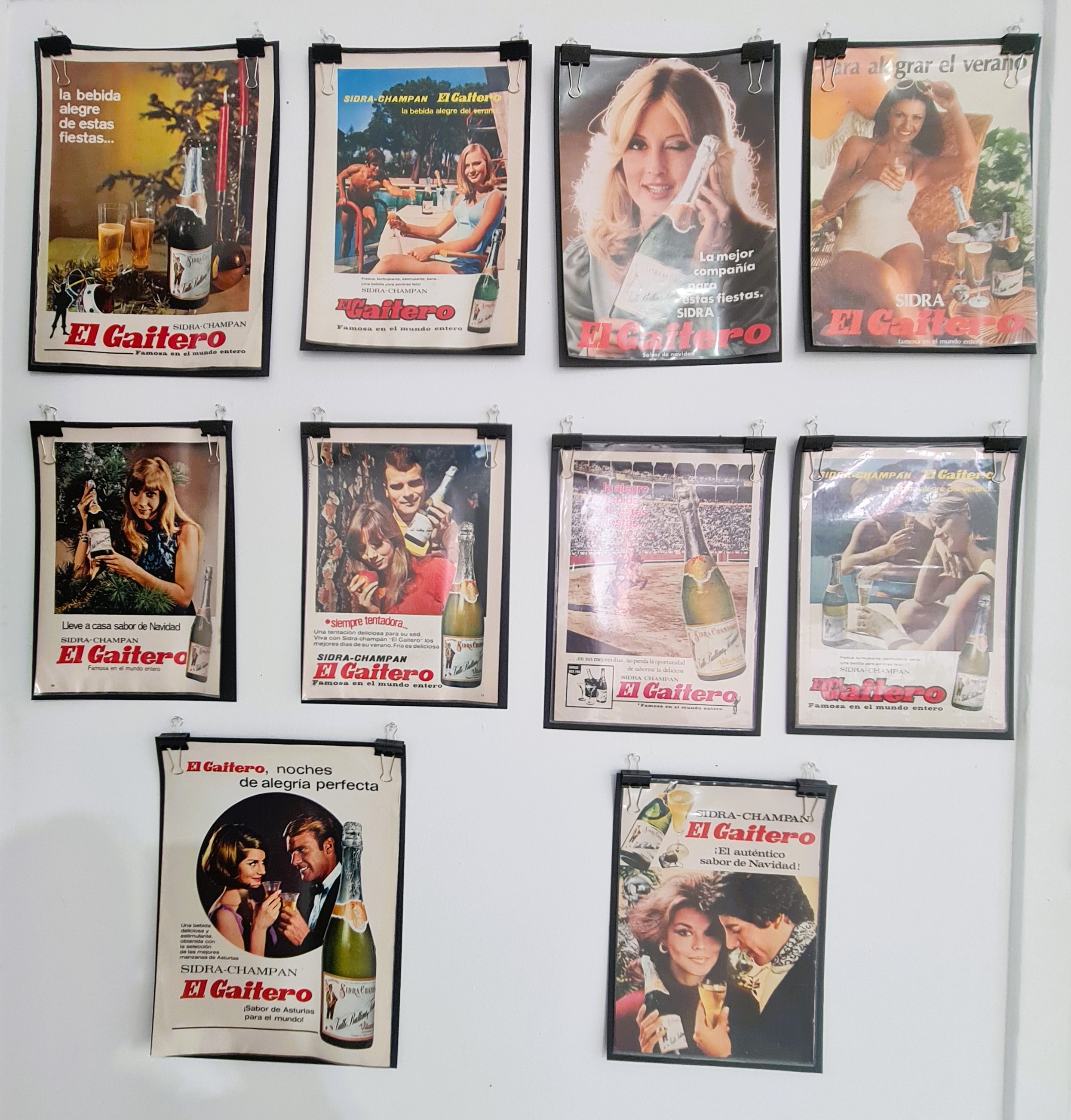
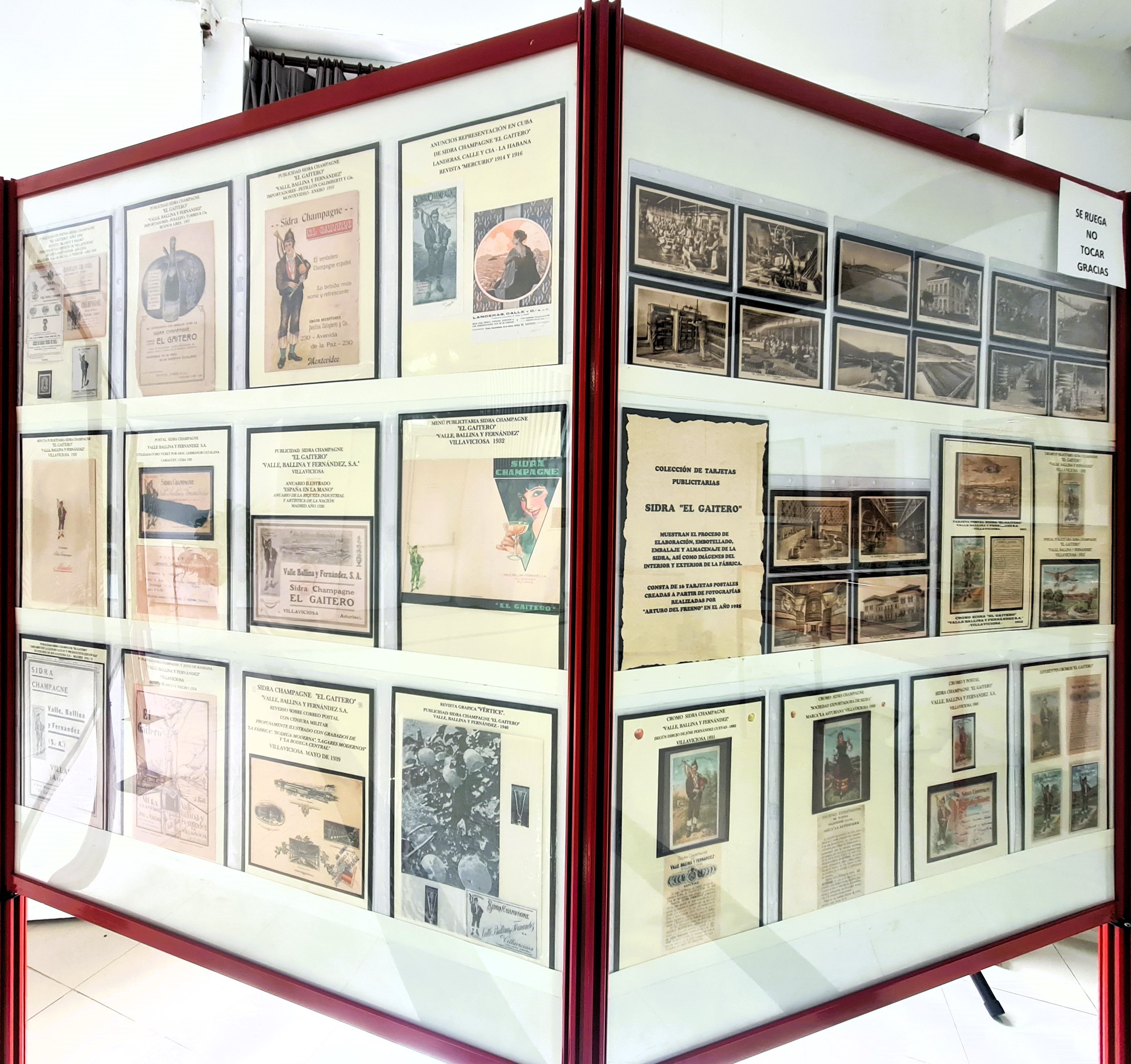
– Oldest El Gaitero stamp (1893). Photos by Ramon del Fresno showing the production, bottling and packaging. In black and white in 1925. Postcards of the El Gaitero aircraft 1911 black and white, in colour the following year. 60’s and 70’s advertising.
– Cromo más antiguo de El Gaitero (1893). Fotos de Ramón del Fresno mostrando la elaboración, embotellado y empaquetado. En blanco y negro en 1925. Postales del avión del Gaitero 1911 blanco y negro, en color al año siguiente. Publicidad de los años 60 y 70.
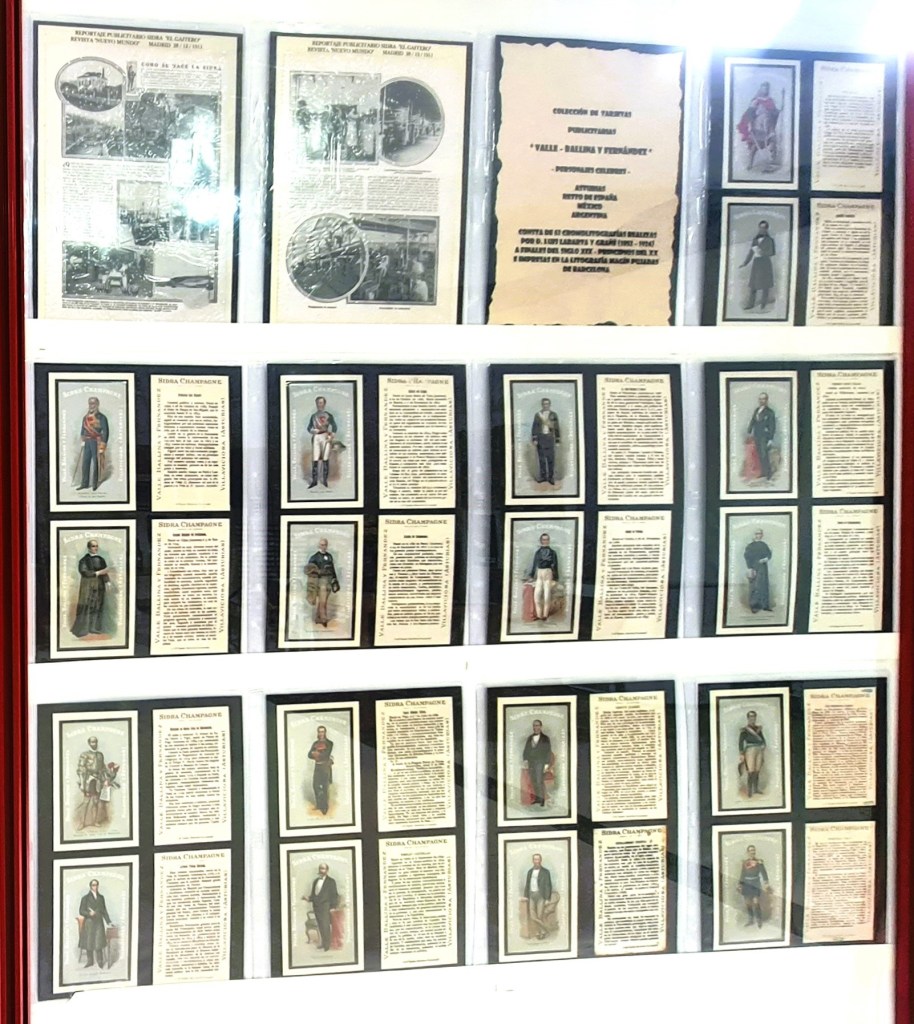
– Series of lithographs commissioned in Barcelona from the best poster artist of the time, Luis Labarta y Grañe, printed at Lit. Magin Pujadas in 1902. The cards were given as a gift with the cider purchased in the grocers’ shops. Each packet contained four collectable cards. Fernando has a total of 54 cards with the complete Asturias series: Rafael del Riego, Menendez Pidal, Campoamor, Jovellanos, Evaristo San Miguel… And the rest corresponding to the rest of Spain series, the Mexican series and the one corresponding to Argentina.
– Serie de litografías encargadas en Barcelona al mejor cartelista de la época, Luis Labarta y Grañé, impresas en Lit. Magín Pujadas en 1902. Las tarjetas iban de regalo con la sidra que se adquiría en los colmados. En cada paquete aparecían cuatro tarjetas coleccionables. Fernando tiene en total 54 tarjetas con la serie de Asturias completa: Rafael del Riego, Menéndez Pidal, Campoamor, Jovellanos, Evaristo San Miguel… Y el resto correspondiente a las series resto de España, la serie mejicana y la correspondiente a Argentina.

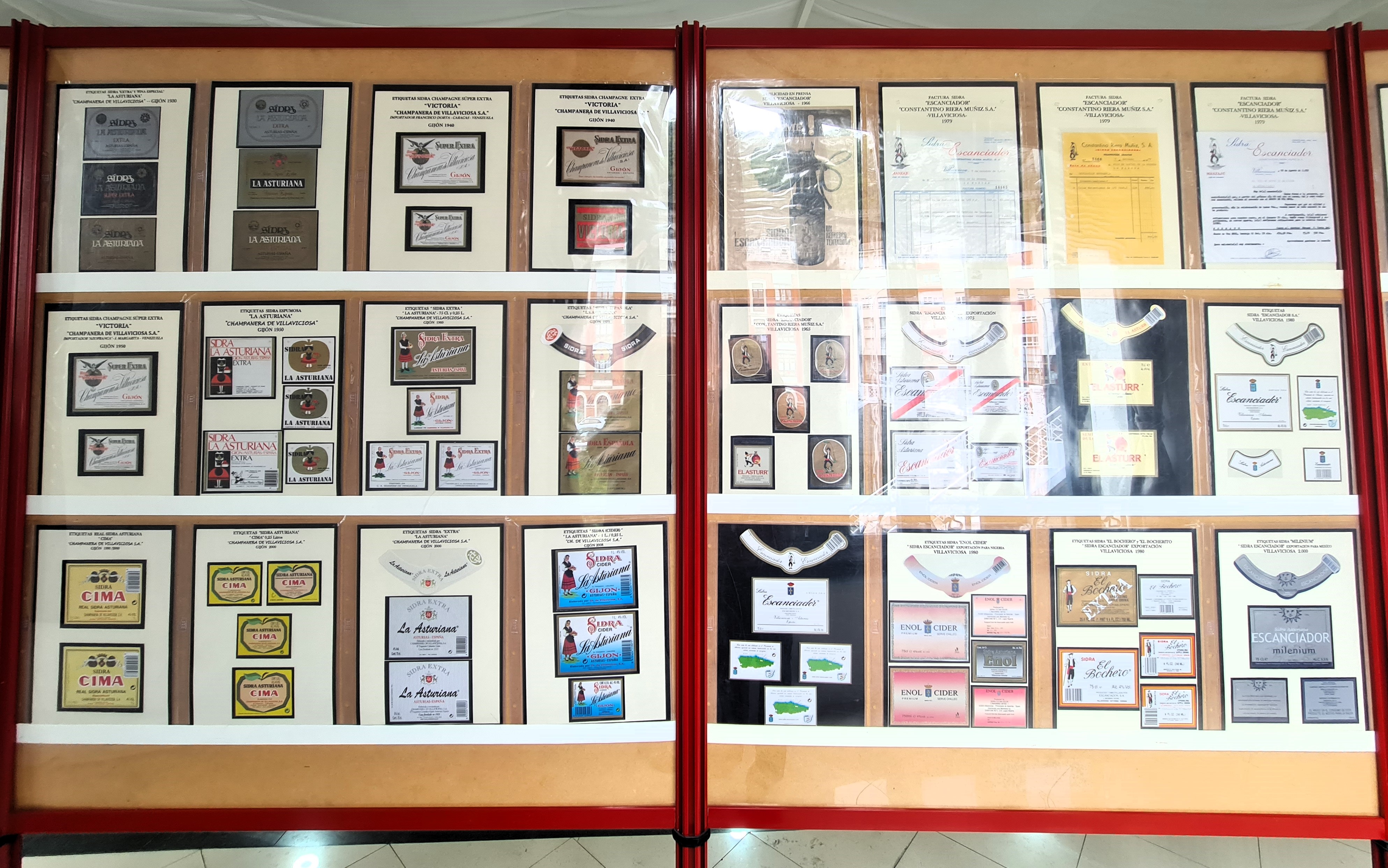
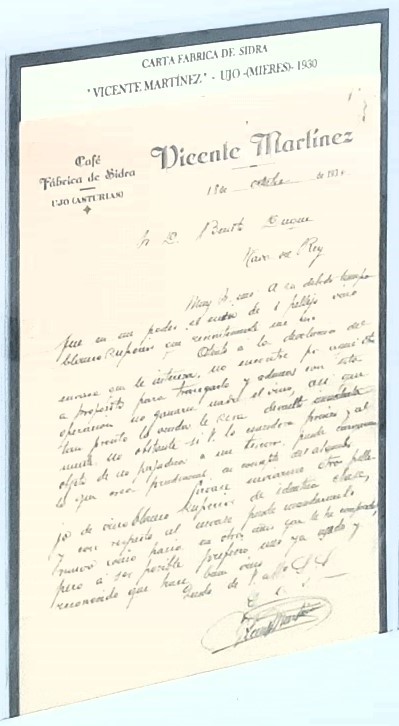
– Escanciador (1960s), La Pepa, Ciber (for Galicia), Kiges (for China), Asturr, El Bochero, Enol, Millenium (2000), on the back label of which Villaviciosa, Ribadesella, Colunga, Nava, Gijon and Luarca appear on the map, but Oviedo does not; «Vicente Martinez» cidery letter (Ujo).
– Escanciador (años 60), La Pepa, Ciber (para Galicia), Kiges (para China), Asturr, El Bochero, Enol, Millenium (2000), en cuya contraetiqueta ponen en el mapa Villaviciosa, Ribadesella, Colunga, Nava, Gijón y Luarca, pero no aparece Oviedo; Carta de la fábrica de sidra «Vicente Martínez» (Ujo)
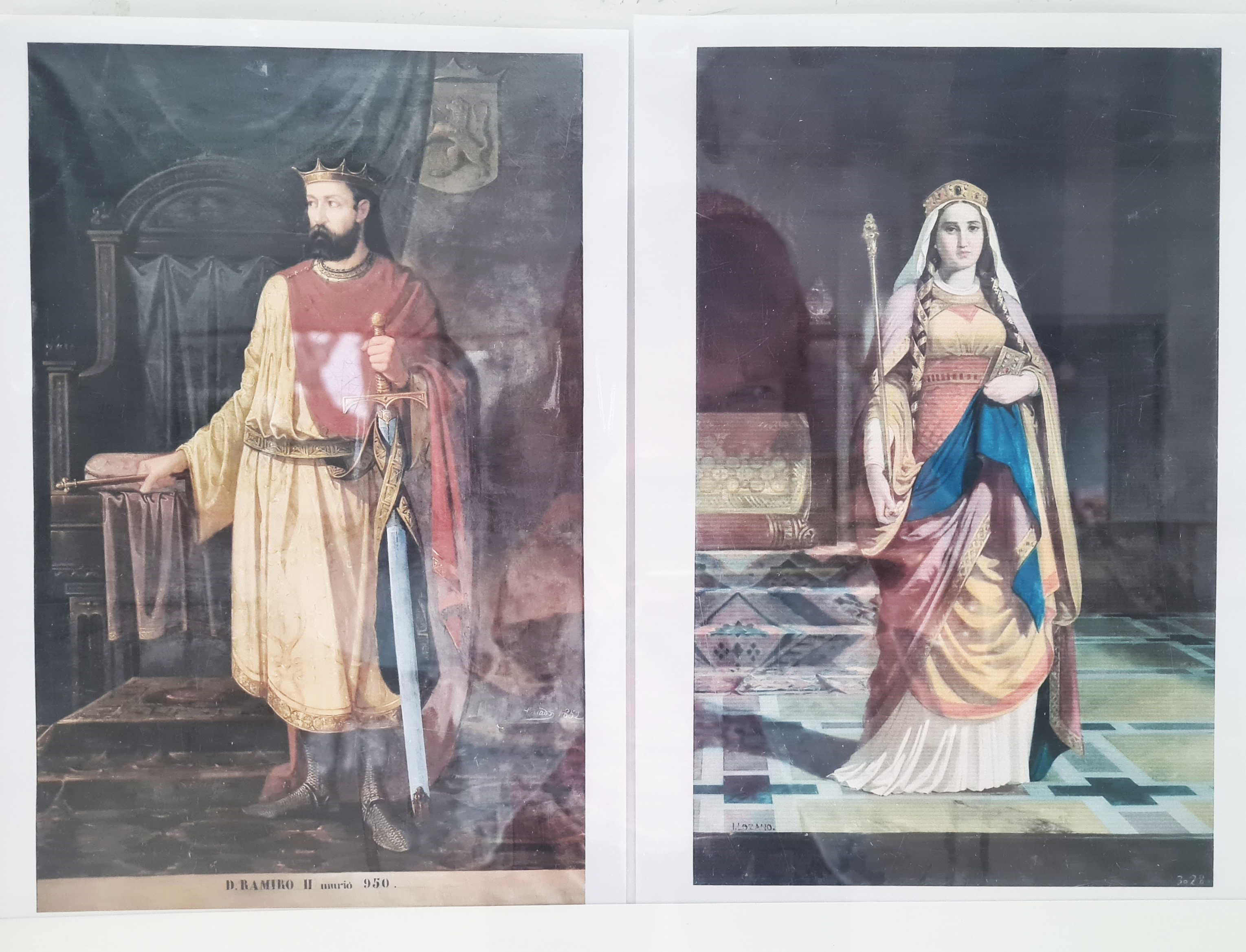
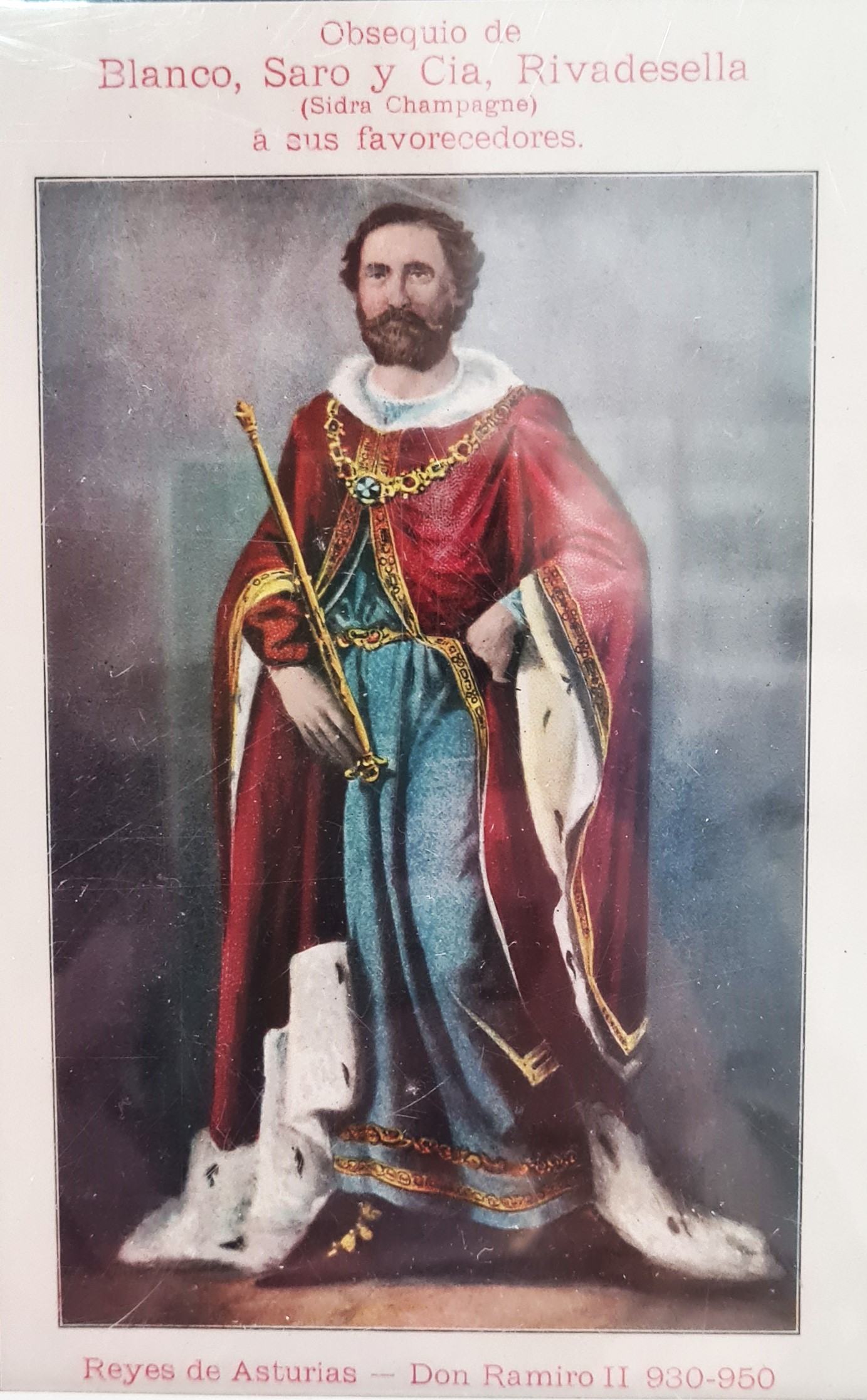
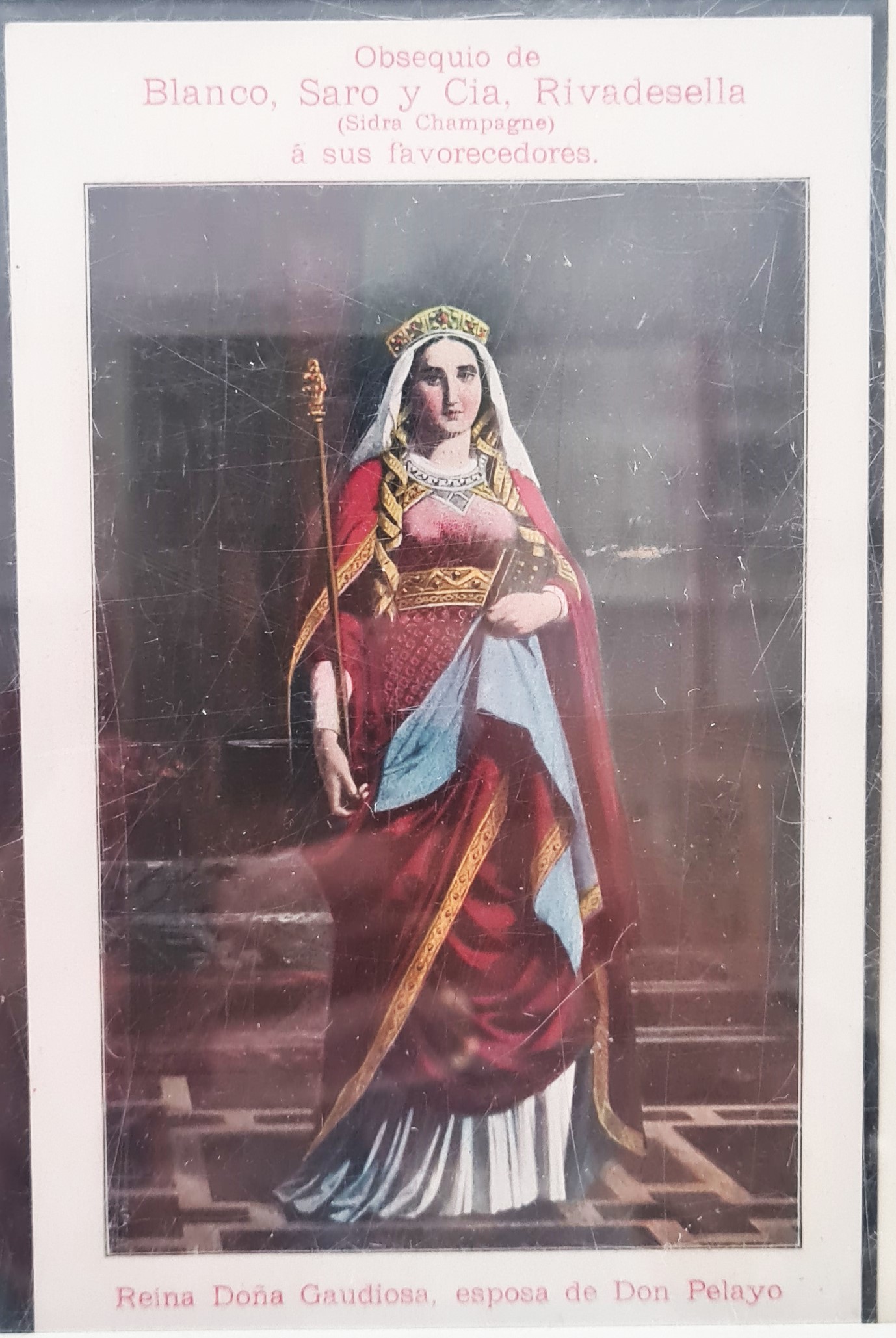
– Series of the Kings of Asturias. In 1852 Queen Isabella II commissioned Luis de Madrazo to paint the paintings of all the Spanish dynasties, which became the property of El Prado and were ceded to the Museum of the Royal Site of Covadonga in 1870. The Ribadesella champagne company Blanco, Saro & Co. commissioned a copyist to do the whole series but, on investigating, Fernando discovered that the one who appeared as Ramiro II was not himself, but Don Galindo II Aznar, Count of Aragon. The series is headed by Pelayo and also includes his wife and daughter Hermesinda (Joaquin Gutierrez, 1856). In order to portray Gaudiosa, Pelayo’s wife, they use the image of Usenda, Hermesinda’s daughter, who, changing the colour of her clothes, appears as if she were her grandmother.
– Serie de los reyes de Asturias. La reina Isabel II encarga en 1852 a Luis de Madrazo los cuadros de todas las dinastías españolas, son propiedad de El Prado y cedidos desde 1870 al Museo del Real Sitio de Covadonga. La champanera de Ribadesella Blanco, Saro y Cía. encarga a un copista la serie entera pero, investigando, Fernando descubre que el que aparece como Ramiro II no es tal, sino don Galindo II Aznar, Conde de Aragón. La serie va encabezada por Pelayo y también aparecen su mujer y su hija Hermesinda (Joaquín Gutiérrez, 1856) Para poder retratar a Gaudiosa, esposa de Pelayo, utilizan la imagen de Usenda, hija de Hermesinda, la cual, cambiándole el color de los ropajes aparece como si fuera su abuela.

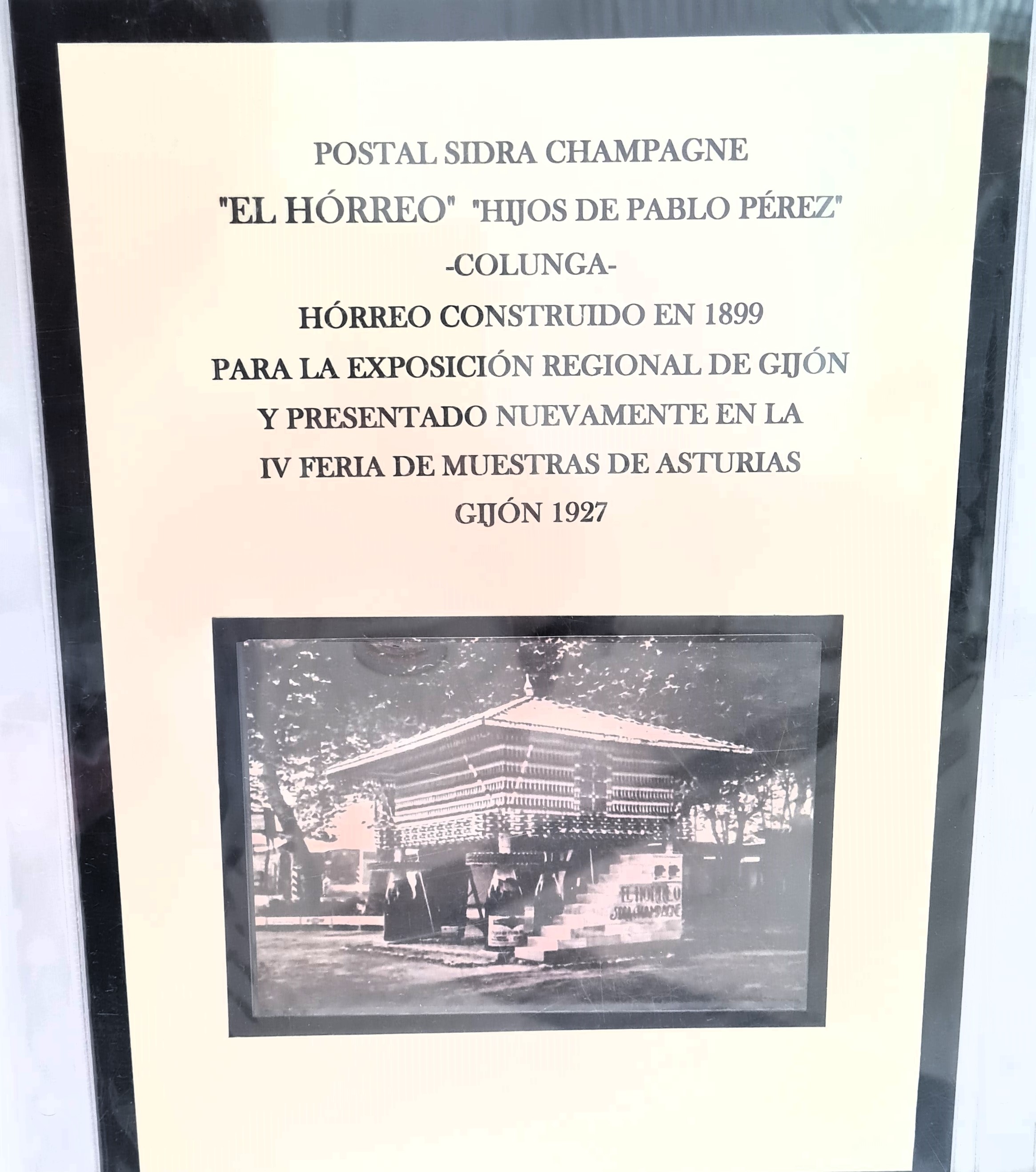
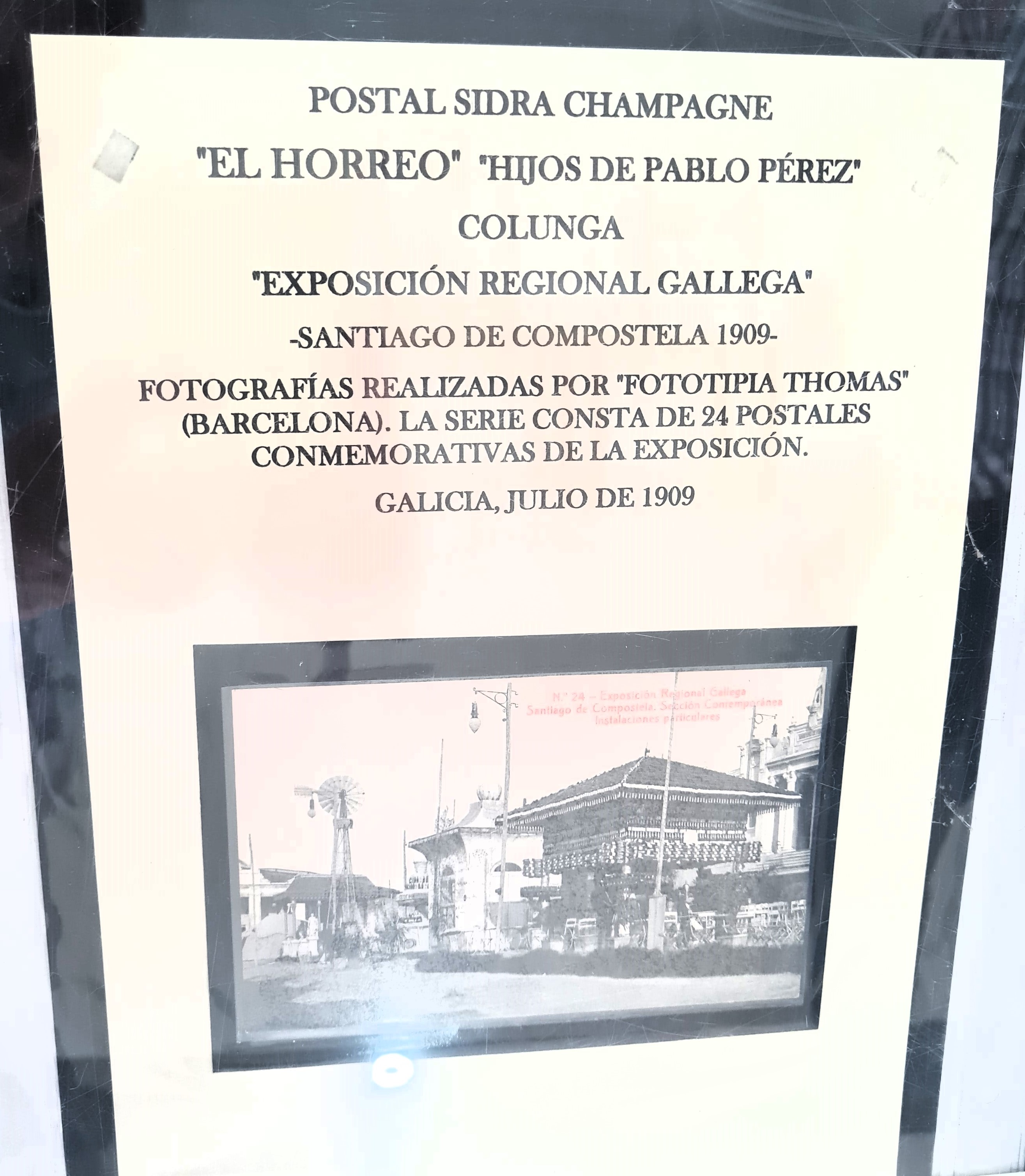
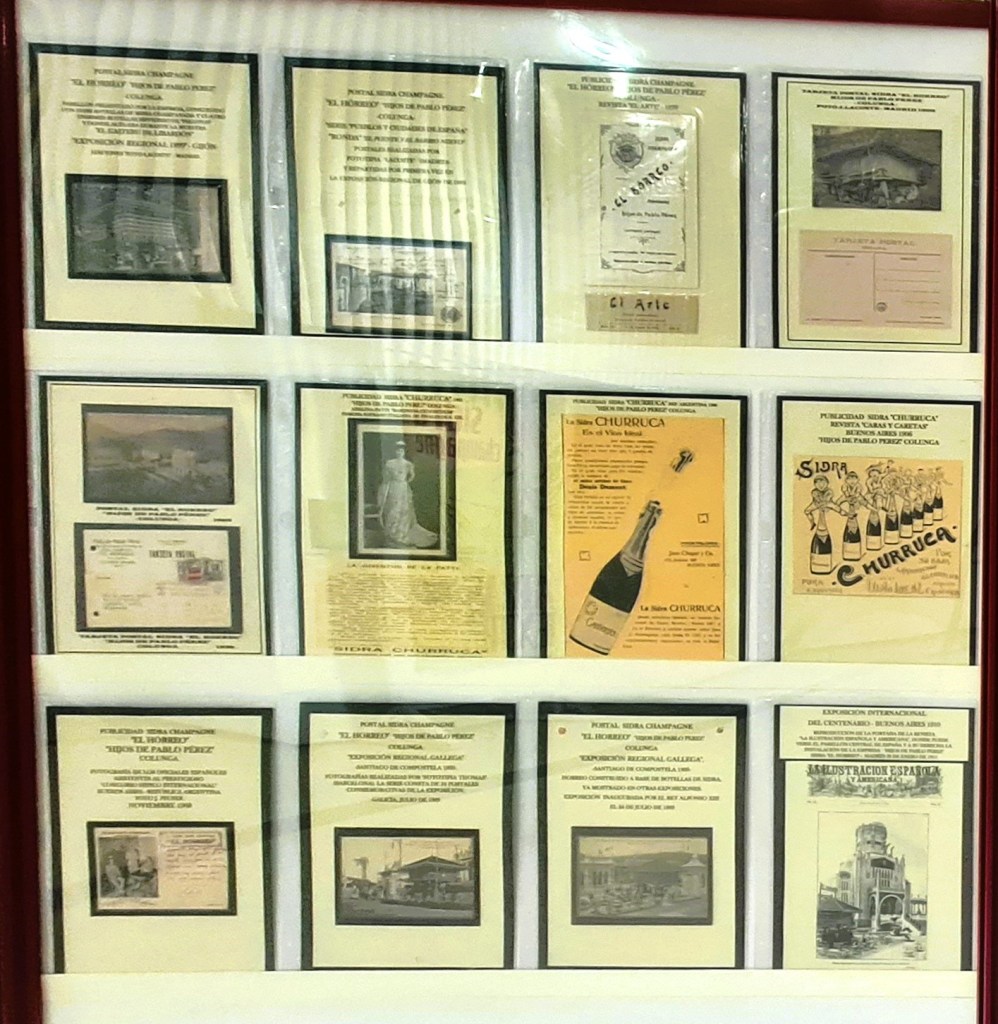
– El Gaitero’s great rival, which came onto the market in 1890, was El Horreo, which appeared in 1897. This provoked a great advertising campaign on the part of the former, causing an increase in expenditure from approximately 8,000 pesetas to more than 30,000 pesetas in 1905 and 1906. El Horreo, sons of Pablo Perez, had business in Madrid, concessions in ports and roads. They presented themselves at the Regional Exhibition in Gijon with an horreo (traditional Asturian granary) made with 12,000 bottles of cider with its label and huge bottles like the stickers on it. The staircase is made with crates of cider bottles where «Libardon piper» performs. The horreo is in Gijon in 1899 and, the following year, it goes to compete with the Eiffel Tower in Paris for the International Exhibition of 1900. In 1906 it was at the Spanish-French Exhibition in Zaragoza, and in 1909, at the Galician Regional Exhibition in Santiago de Compostela. In 1911, he went to the International Exhibition in Buenos Aires. In 1924, on the occasion of the first Gijon Trade Fair. When it was not travelling the world, the horreo was set up on the esplanade in front of the factory in Colunga. Among its advertisements are the postcards commemorating the wedding of Alfonso XIII in 1906 or those dedicated to the Sieges of Zaragoza with images of the ruins and characters of the time, which were given away at the 1907 exhibition.
– El gran rival de El Gaitero, que sale al mercado en 1890, es El Hórreo, que aparece en 1897. Esto provoca un gran despliegue publicitario por parte de los primeros, haciendo que se pase de un gasto aproximado de 8.000 pesetas a más de 30.000 en los años 1905 y 1906. El Hórreo, hijos de Pablo Pérez, tenían negocios en Madrid, concesiones en puertos y carreteras. Se presentan en la Exposición Regional de Gijón con un hórreo hecho con 12.000 botellas de sidra con su etiqueta y botellones enormes como los pegollos del mismo. La escalinata está hecha con cajones de botellas de sidra donde actúa «el Gaitero de Libardón». El hórreo está en Gijón en 1899 y, al año siguiente, va a competir con la Torre Eiffel a París para la Exposición Internacional de 1900. En 1906 está en la Exposición Hispano-francesa de Zaragoza, en 1909, en la Exposición Regional Gallega de Santiago de Compostela. En 1911, se va a la Exposición Internacional de Buenos Aires. En 1924, con motivo de la primera Feria de Muestras de Gijón. Cuando no estaba recorriendo el mundo, el hórreo se montaba en la explanada delante de la fábrica en Colunga. Entre sus publicidades se encuentran las postales conmemorativas de la boda de Alfonso XIII de 1906 o las dedicadas a los Sitios de Zaragoza con imágenes de las ruinas y personajes de la época y que se regalaron en la exposición de 1907.

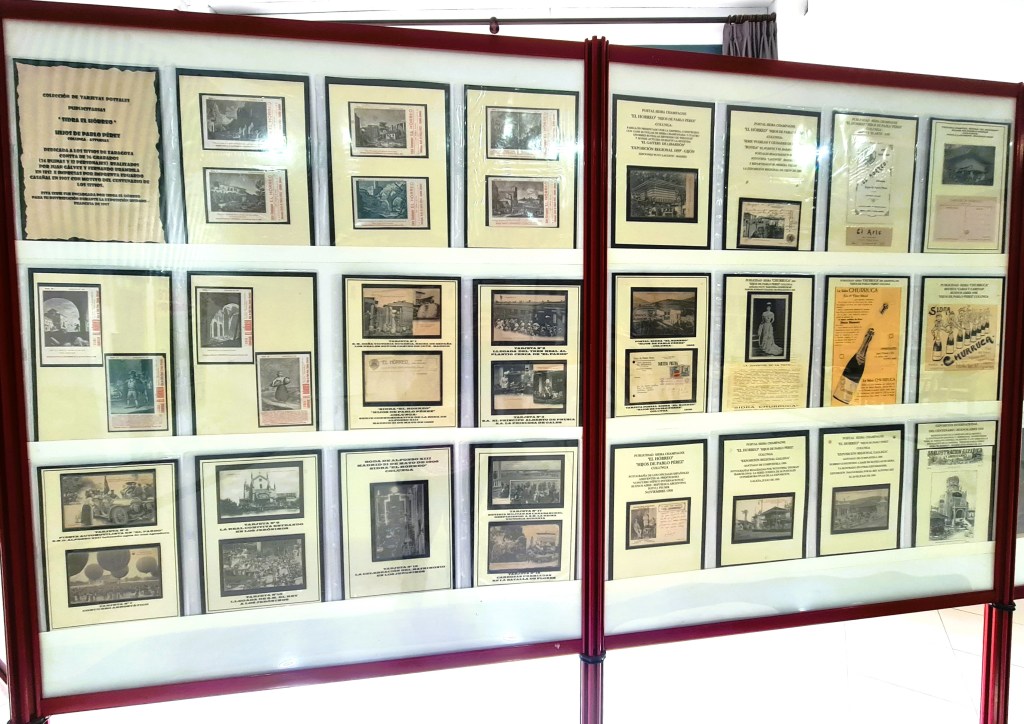
– The first press advertising of Sidra Corzo, in a 1926 yearbook; El Morrudo, from San Esteban de las Cruces, in 1944; San Timoteo, El Llagar del Nora, Ballongo.
– La primera publicidad en prensa de Sidra Corzo, en un anuario del año 1926; El Morrudo, de San Esteban de las Cruces, de 1944; San Timoteo, El Llagar del Nora, Sidra Ballongo.
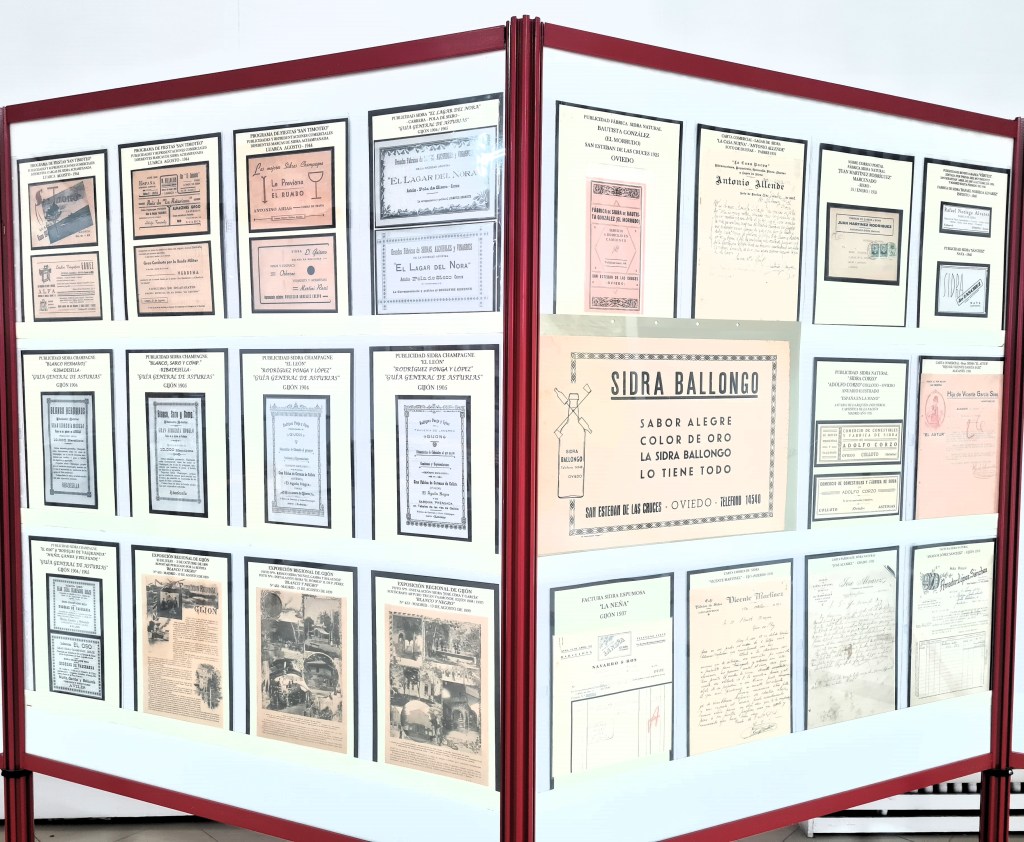
– La Victoria, La Praviana and El Gaitero; Blanco y Negro magazine, report on the 1899 Gijon Regional Exhibition; Years 1893 and 1899, Sidra Maria de Oviedo and Sidra La Asturiana de Caravia labels that came from Cuba via Cádiz, official records from Havana, with the governor’s signature and stamps; Sparkling cider El Oso, from Muñiz, Gamba y Belaunde, cider from Aviles with representation in Madrid; Sparkling cider from Luarca, Jaime Sagredo; Cofradia de los Siceratores (Cider Advocates Guild): Roberto Llamedo, Ricardo del Rio and Ana Emilia Ordoñez, also Luis Roza.
-La Victoria, La Praviana y El Gaitero; Revista Blanco y Negro, reportaje de la Exposición Regional de Gijón de 1899; Años 1893 y 1899, Sidra María de Oviedo y Sidra La Asturiana de Caravia etiquetas que vinieron de Cuba vía Cádiz, registros oficiales de La Habana, con la firma del gobernador y sellos; Sidra champagne El Oso, de Muñíz, Gamba y Belaunde, sidra de Avilés con representación en Madrid; Champanera de Luarca, Jaime Sagredo; Cofradía de los Siceratores: Roberto Llamedo, Ricardo del Río y Ana Emilia Ordóñez, también Luis Roza.

– Real Sidra Asturiana; PDO C¡der of Asturias; ice cider; homemade cider.
– Real Sidra Asturiana; Sidra DOP de Asturias; sidra de hIelo; sidra casera.
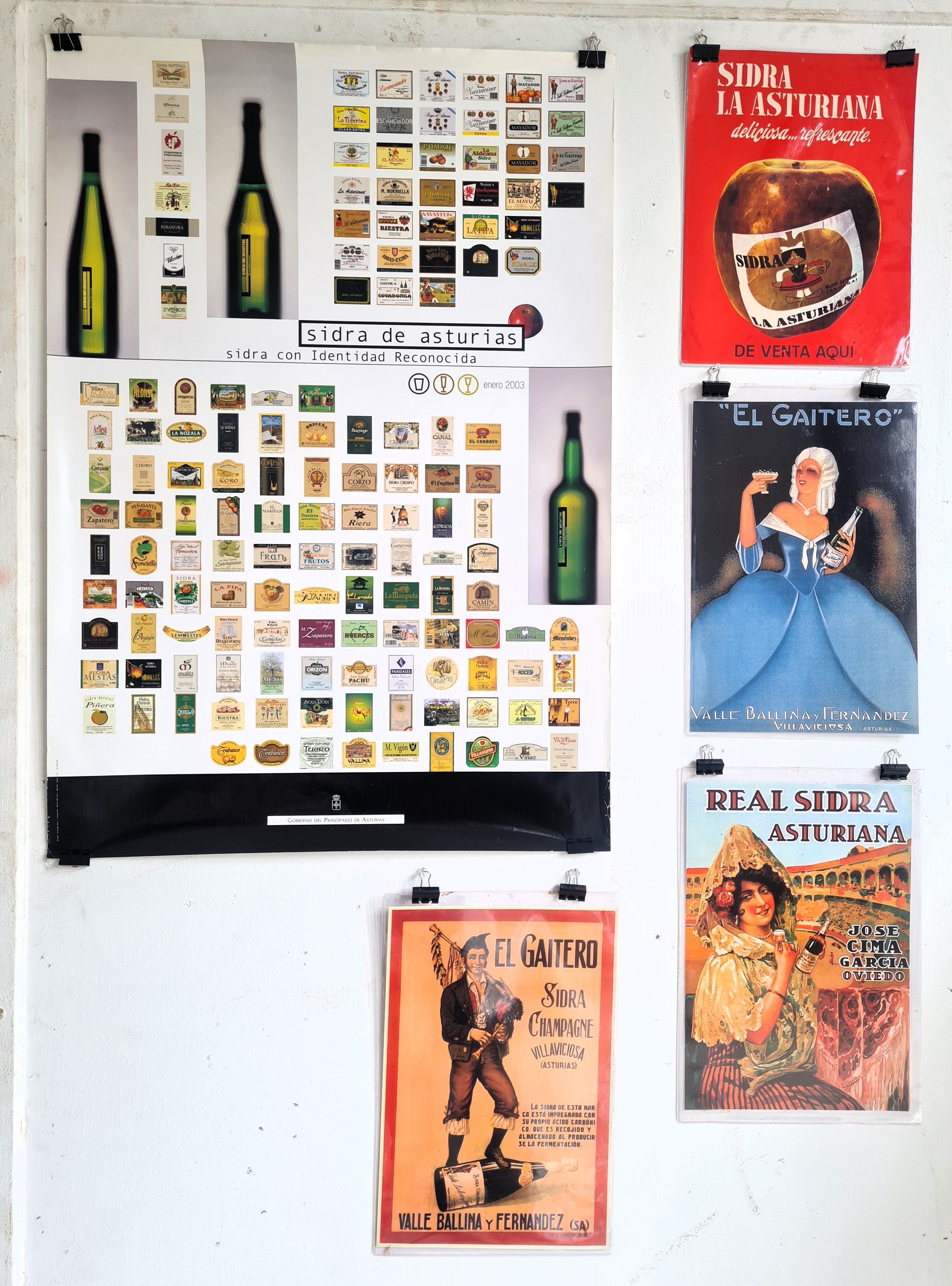
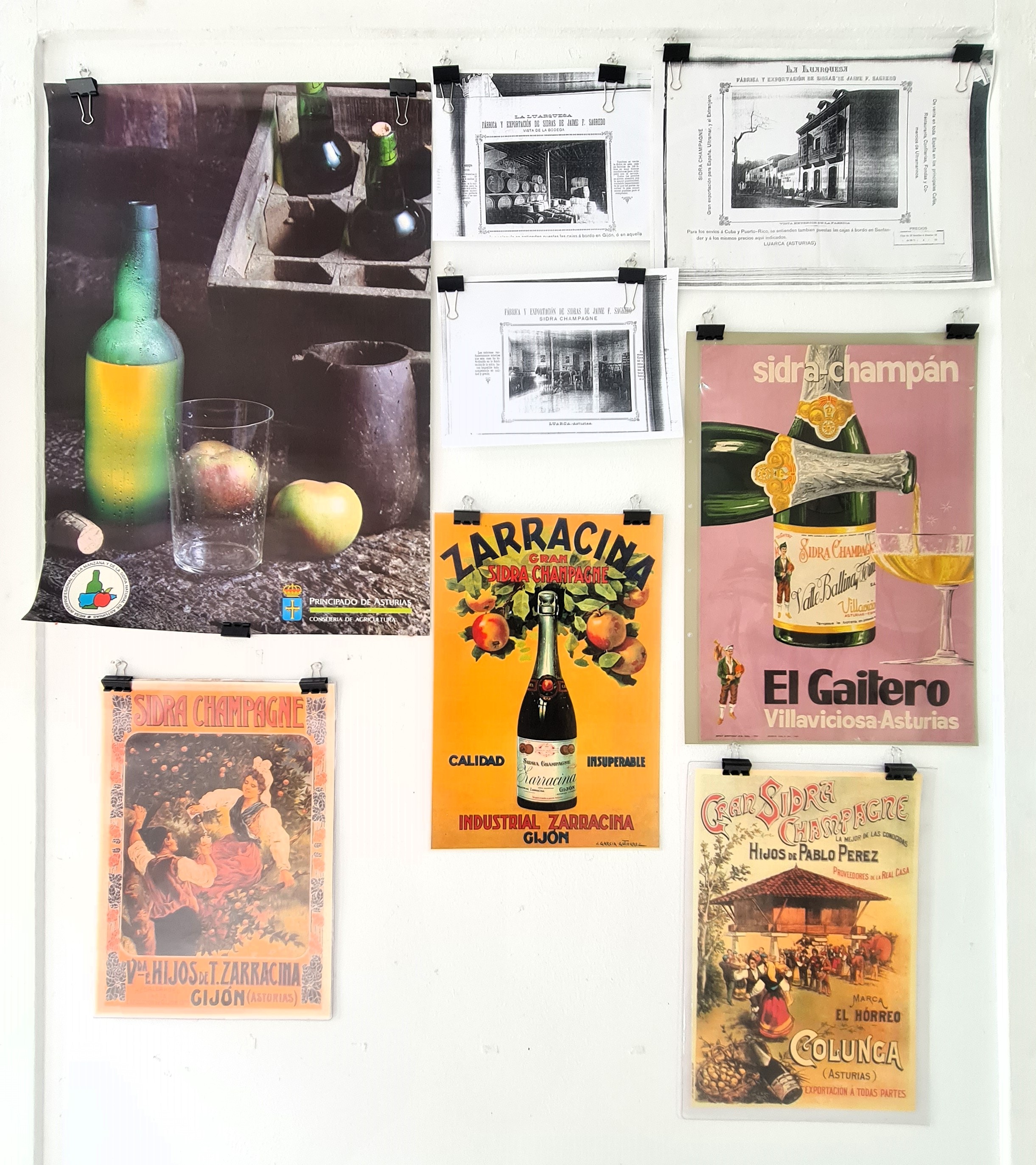
– Poster by Garrido (new) and update of the original by Neto.
– Cartel de Garrido (nuevo) y actualización del original de Neto.

– Champagne cider: La Princesa de Asturias (Siero), large advertisement reading: «Children can drink»; Cider poster (1905); Pelayo, El Gaitero, El Hórreo, Valle, Ballina y Fernández, Zarracina.
– Sidra champán: La Princesa de Asturias (Siero), publicidad de gran tamaño donde se lee: “Los niños pueden beber”; Cartel de 1905;Pelayo, El Gaitero, El Hórreo, Valle, Ballina y Fernández, Zarracina.
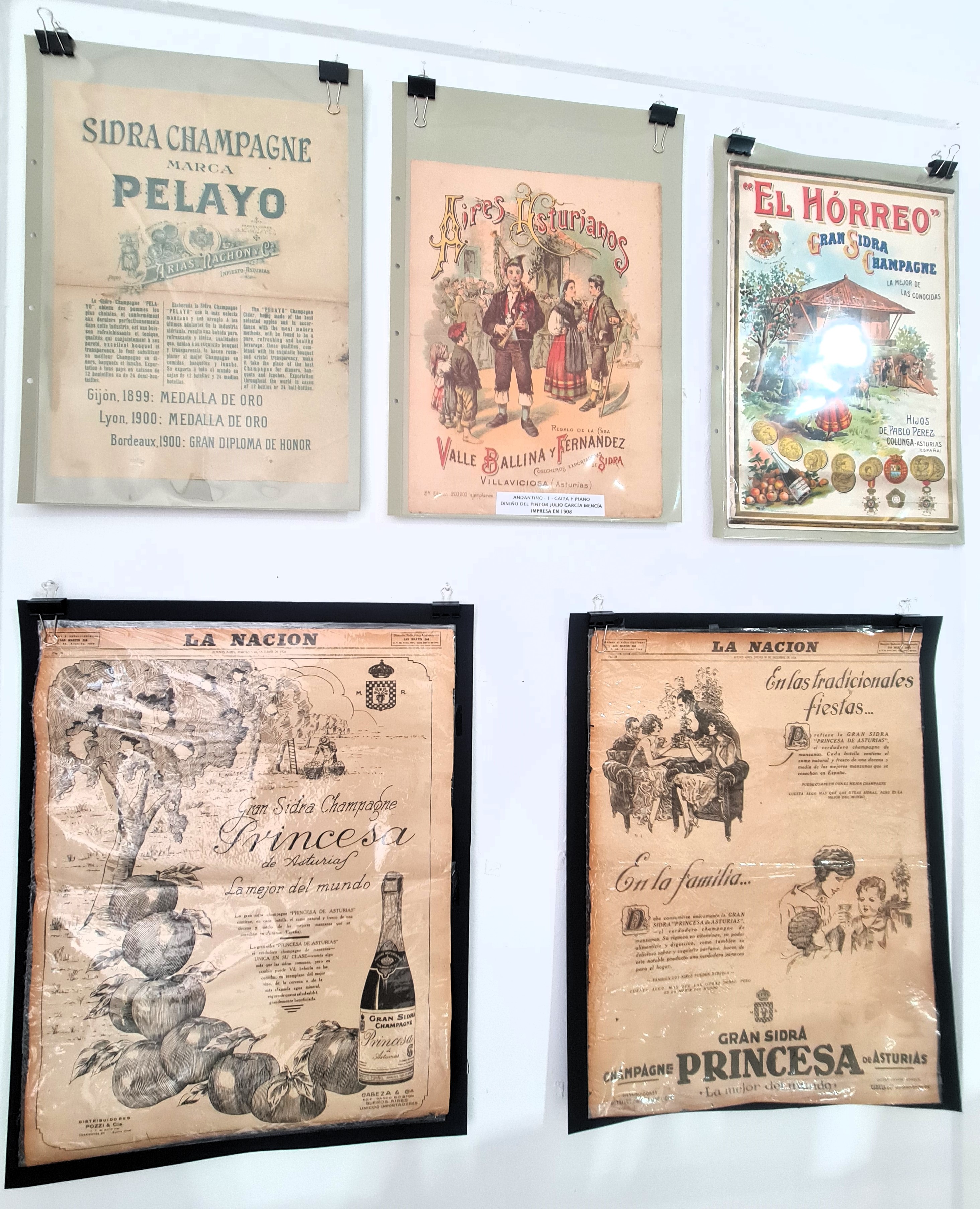
– Music score of El Gaitero (Julio Garcia Mencia), author also original and life-size paintings sent to grocers in Cuba; Manzaju cider; Villabona (Nava), Escanciador and El Gaitero pennants; Vereterra pack of cards (Viva Asturias cider)
-Partitura de El Gaitero (Julio García Mencía), autor también pinturas originales y a tamaño natural enviadas a los colmados de Cuba; Sidra Manzajú; Banderines de sidra Villabona (Nava), Escanciador y El Gaitero; Baraja de Vereterra (sidra Viva Asturias)

– Sidra Churruca (Sidra El Horreo) , made exclusively for South America: «Due to its low alcohol content it is the ideal wine for children».
-Sidra Churruca (Sidra El Hórreo) , elaborada exclusivamente para Sudamérica: “Por su baja graduación alcohólica es el vino ideal para las criaturas”
– Grusifas (Grupo Sindical de Fabricantes de Sidra), cooperative of Nava champagne cider makers; Rosé and alcohol-free Pomar cider.
-Grusifás (Grupo Sindical de Fabricantes de Sidra), cooperativa de llagareros de Nava de sidra achampanada; Pomar Rosé y Sin.

– Champanera de Villaviciosa, acquired by Cima when the latter closed down, whose logo is very modern for a 1950s company.
-Champanera de Villaviciosa, que adquiere Cima cuando ésta cierra, cuyo logo resulta muy moderno para ser de los años 50.

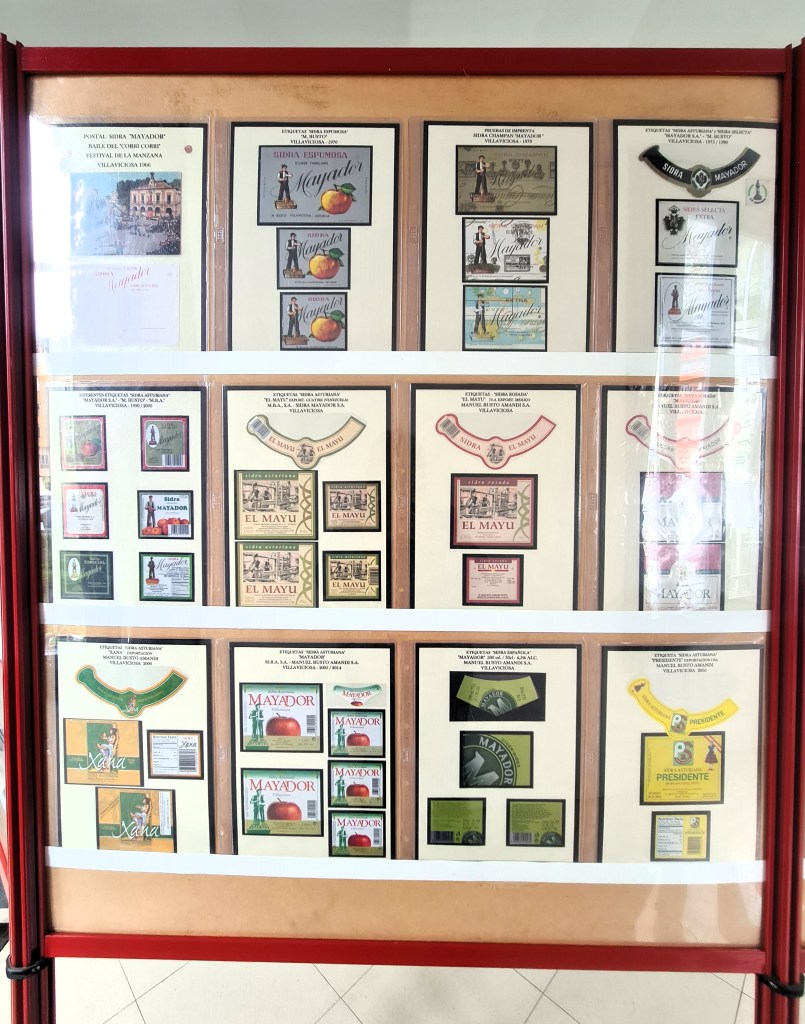
– Mayador and old Xana label.
-Mayador y antigua etiqueta Xana.
– Cider festivals, Tudela Veguin cidery, El Sol de Asturias, Viva Asturias.
– Festivales de sidra, Llagar de Tudela Veguín, el Sol de Asturias, Viva Asturias.
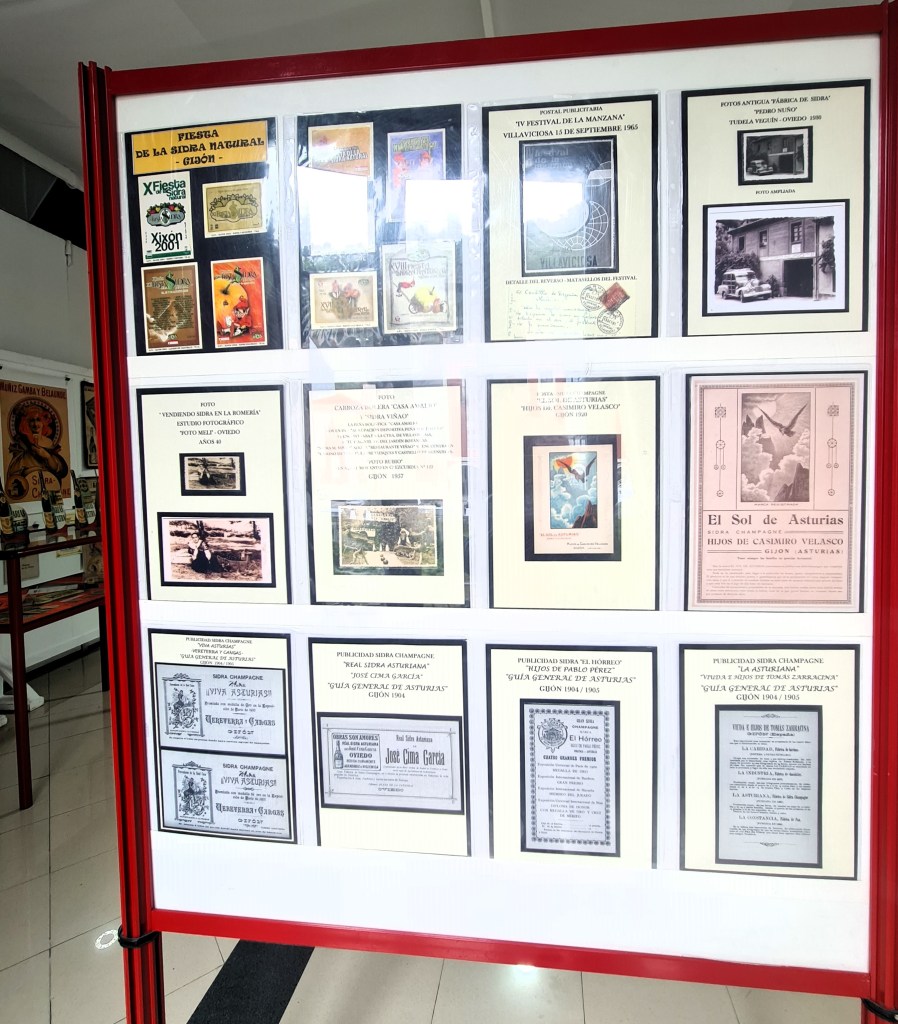
– Advertisements from 1894 in the magazine Blanco y Negro. Villaviciosa, Buenos Aires and Cuba; La juventud de Patty, El Horreo advertising; President of South Africa (1910); The boy, Queen Regent Maria Cristina and Pope Pius XII advertising cider;
– La Providencia, whose shipping details were placed on the front of the pipes; Champagne cellars: Asturiana, de Villaviciosa, Vigil y Blanco; El Segador, la Gran Cruz (with a large number of pictures of virgins and altars)
– Publicidades de 1894 en la revista Blanco y Negro. Villaviciosa, Buenos Aires y Cuba; La juventud de la Patty, publicidad El Hórreo; Presidente de Sudáfrica (1910); El niño, la reina regente María Cristina y el papa Pío XII anunciando sidra;
– La Providencia, cuyos datos de envío se colocaban en el frontal de las pipas; Champaneras: Asturiana, de Villaviciosa, Vigil y Blanco; El Segador, la Gran Cruz (con gran cantidad de cromos de vírgenes y altares)
– Valle, Ballina y Fernandez: collectable cards of famous people of the time.
– Valle, Ballina y Fernández: tarjetas coleccionables de personajes célebres de la época.
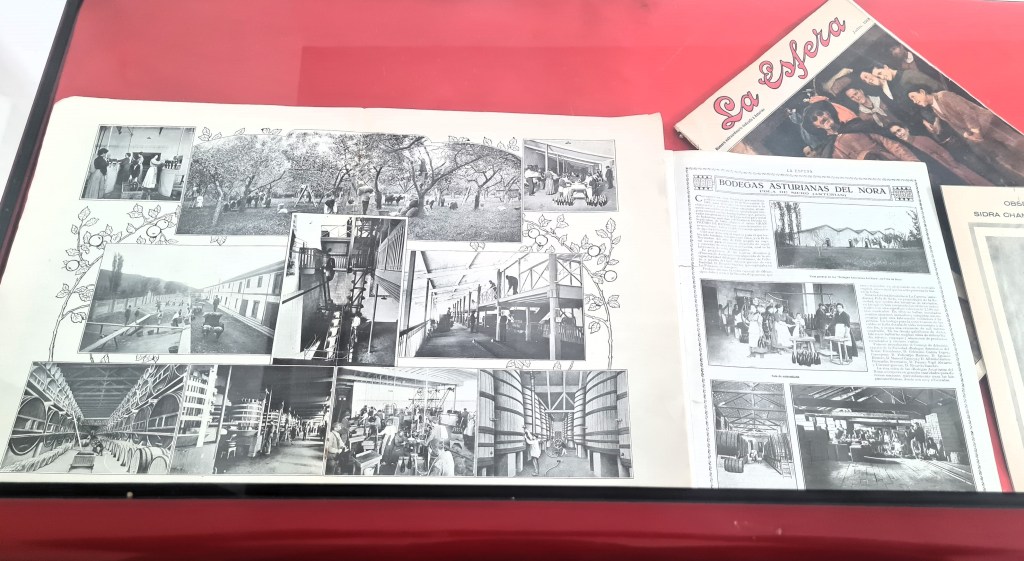
– Bottling process and women workers at Bodegas Asturianas del Nora.
– Proceso de embotellado y mujeres trabajadoras en Bodegas Asturianas del Nora.
 Ciderayalga